The Storyteller Is the Story
Why does Beowulf open with 'Hear me'? Because it was never meant to be read — it was meant to be performed. Jimmy explains…
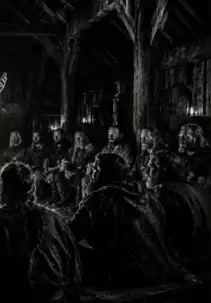
Why does Beowulf open with 'Hear me'? Because it was never meant to be read — it was meant to be performed. Jimmy explains…
Beowulf has survived over a thousand years — and most people have never really read it. Jimmy opens a five-part analysis with translations, the…
Maitre Hauchecorne of Breauté picks up a piece of string. He did not steal a wallet. He was not duplicitous in this particular instance.…
The Wife of Bath opens with one word: experience. Jimmy's analysis unpacks her empiricist philosophy, the rubber band theory of power, and how she…
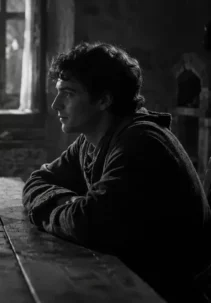
Why the translator you choose changes everything you read — and what that tells us about so-called "editing" of classic literature.
There is a moment in Act Two where Hamlet has everything he needs to act. The ghost has told him the truth. Claudius is…
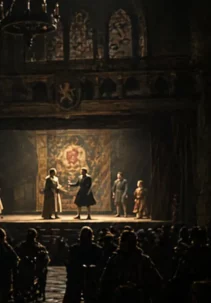
This first essay argues that The Art of War is not simply a military manual attributed to a famous general. It is a text…
In Blog #2, we’ll examine the world of A&P – the middle ground, the center, the balance. Where behavior is structured, expectations are enforced,…

A Duel: A Reading with Jimmy Series In this three-part blog series, Jimmy examines A Duel not as a patriotic story or a simple…
In this first essay, we examine the voice of Travel Is So Broadening. Before we judge what Mr. Schmaltz thinks, we need to understand…
This first essay argues that Macbeth is not a moral lecture about ambition. It’s a psychological portrait of obsession. Shakespeare shows us a mind…
When readers talk about unreliability in fiction, they usually mean error. The narrator misunderstands events, exaggerates details, or lacks full knowledge. Unreliability becomes a…