In this blog, we confront the novel’s most unsettling truth: retreating from the world does not protect us from it. Henry tries to build a private refuge with Catherine, away from war, politics, and consequence. But Hemingway does not allow illusions to survive. The ending forces us to ask whether Henry has learned anything at all — or whether detachment has simply taken a new form.
If A Farewell to Arms were a love story, it would end in Switzerland. The mountains. The snow. The retreat from war. The quiet domestic rhythm. But Lt. Henry does not allow the novel to end in safety. He moves us into Book V — and removes the last insulation Henry has left.
The Illusion of Control
In Switzerland, Henry appears almost settled.
He skis. He reads. He prepares for fatherhood. He lives in a kind of suspended neutrality.
War feels distant. Death feels theoretical.
For the first time, Henry seems to inhabit a future rather than merely survive a present.
But this stability is fragile.
Because Henry’s security has never rested on conviction.
It rests on circumstance.
And circumstance is about to change.
Catherine’s Labor: The Long Unraveling
The hospital scenes in Book V are deliberately slow.
There is no melodrama. No grand speeches. No sudden reversals.
Instead, there is delay.
Time stretches.
Pain accumulates.
Hope rises and falls in measured increments.
The baby is stillborn.
Catherine hemorrhages.
Henry waits.
This is important: he waits.
All the decisiveness he showed during the retreat — the shooting, the escape, the desertion — is useless here.
He cannot act his way out of this.
He cannot reason his way through it.
He cannot detach himself from it.
He must endure.
The Rain Returns
Rain has shadowed the novel from the beginning.
Catherine fears it.
Henry shrugs it off.
Rain becomes the quiet symbol of inevitability — of death that does not ask permission.
When Catherine dies, there is no dramatic thunderclap.
There is simply reality.
Henry stands beside her body. He tries to say goodbye. He speaks to her as if language can reverse what has happened.
It cannot.
This is the moment where insulation fails completely.
No Redemption. No Revelation.
Readers often look for a final transformation.
Surely this loss changes him.
Surely this grief produces clarity.
But Hemingway refuses to dramatize Henry’s internal awakening.
There is no confession. No vow. No moral articulation.
Instead, we get one of the most famous closing gestures in modern fiction:
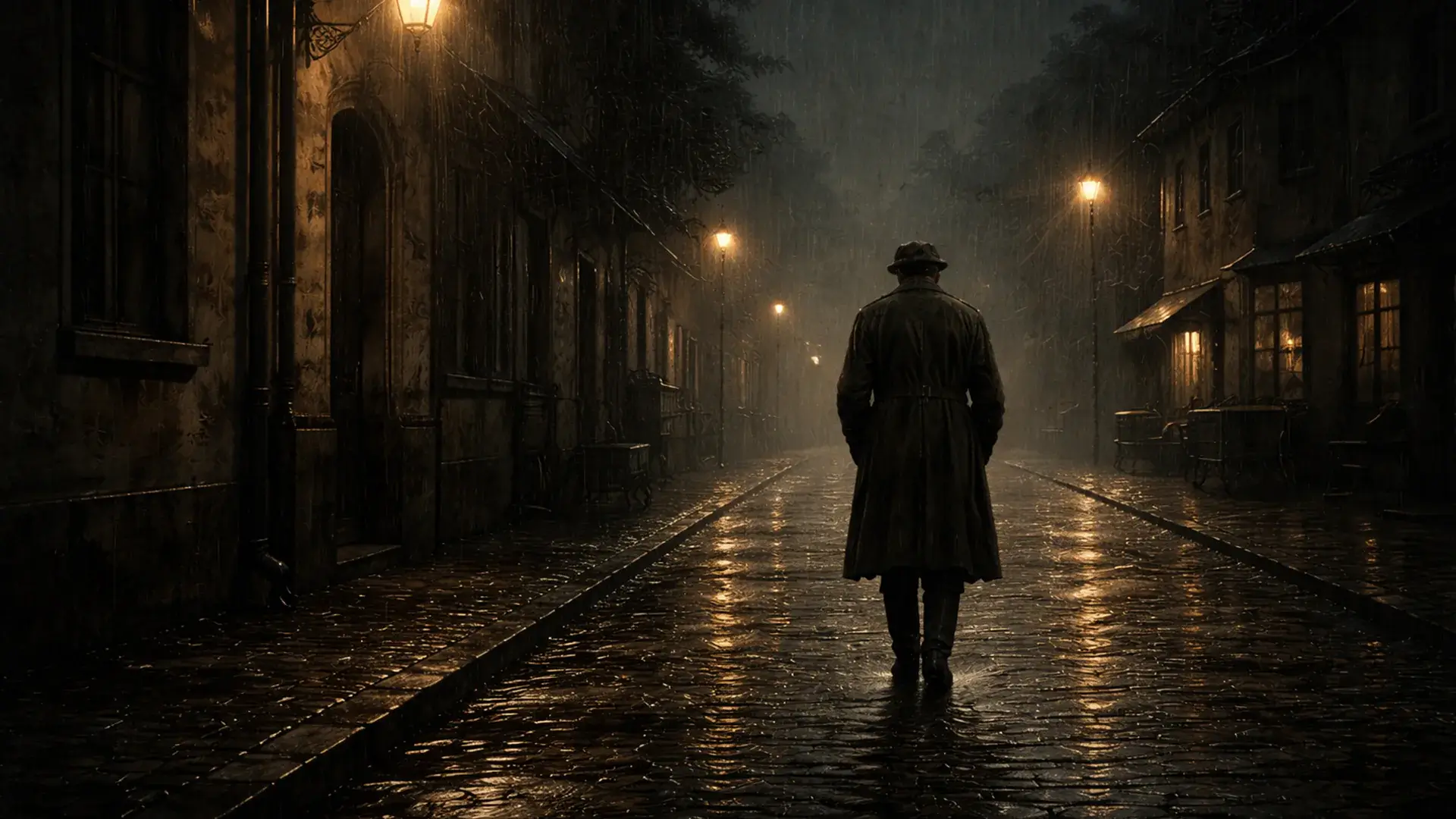
Henry walks back to the hotel in the rain.
That’s it.
No speech.
No collapse.
No catharsis.
What That Walk Means
The walk is not heroic.
It is not symbolic redemption.
It is not spiritual enlightenment.
It is continuation.
Henry does what he has done throughout the novel:
He survives.
But survival now feels hollow.
Because survival without attachment is isolation.
He has chosen self-preservation repeatedly.
Now preservation remains — but what has been preserved?
The Central Thesis, Proven
Across this series, we have argued that A Farewell to Arms is not primarily a tragic love story.
It is a study of a man who repeatedly chooses self-preservation over commitment.
In Book I, Henry drifts.
In Book III, he deserts.
In Switzerland, he retreats into privacy.
And in Book V, the final insulation — Catherine — is removed.
Now he stands alone.
Not condemned.
Not redeemed.
Simply alone.
What Hemingway Leaves Unsaid
The power of the ending lies in what it refuses to explain.
Does Henry regret?
Does he grow?
Does he understand anything new?
Hemingway does not answer.
Because the novel has never been about explicit moral commentary.
It has been about pattern.
And the pattern is consistent.
When confronted with chaos, Henry withdraws.
When confronted with danger, he escapes.
When confronted with grief, he endures — and walks on.
The Real Tragedy
The tragedy is not that Catherine dies.
War kills.
Childbirth fails.
Bodies break.
The deeper tragedy is that Henry has no framework left beyond survival.
He cannot rage at God.
He cannot indict the war.
He cannot reconstruct meaning.
He can only move forward physically.
And so he walks back to the hotel in the rain.
Alone.
That concludes the blog trilogy on A Farewell to Arms. Jimmy hopes you enjoyed it, and read the novel with him on our website and YouTube. Enjoy all the classics you’ll find there, and hope to see you again. If you’d like to send me an email, it’s [email protected]