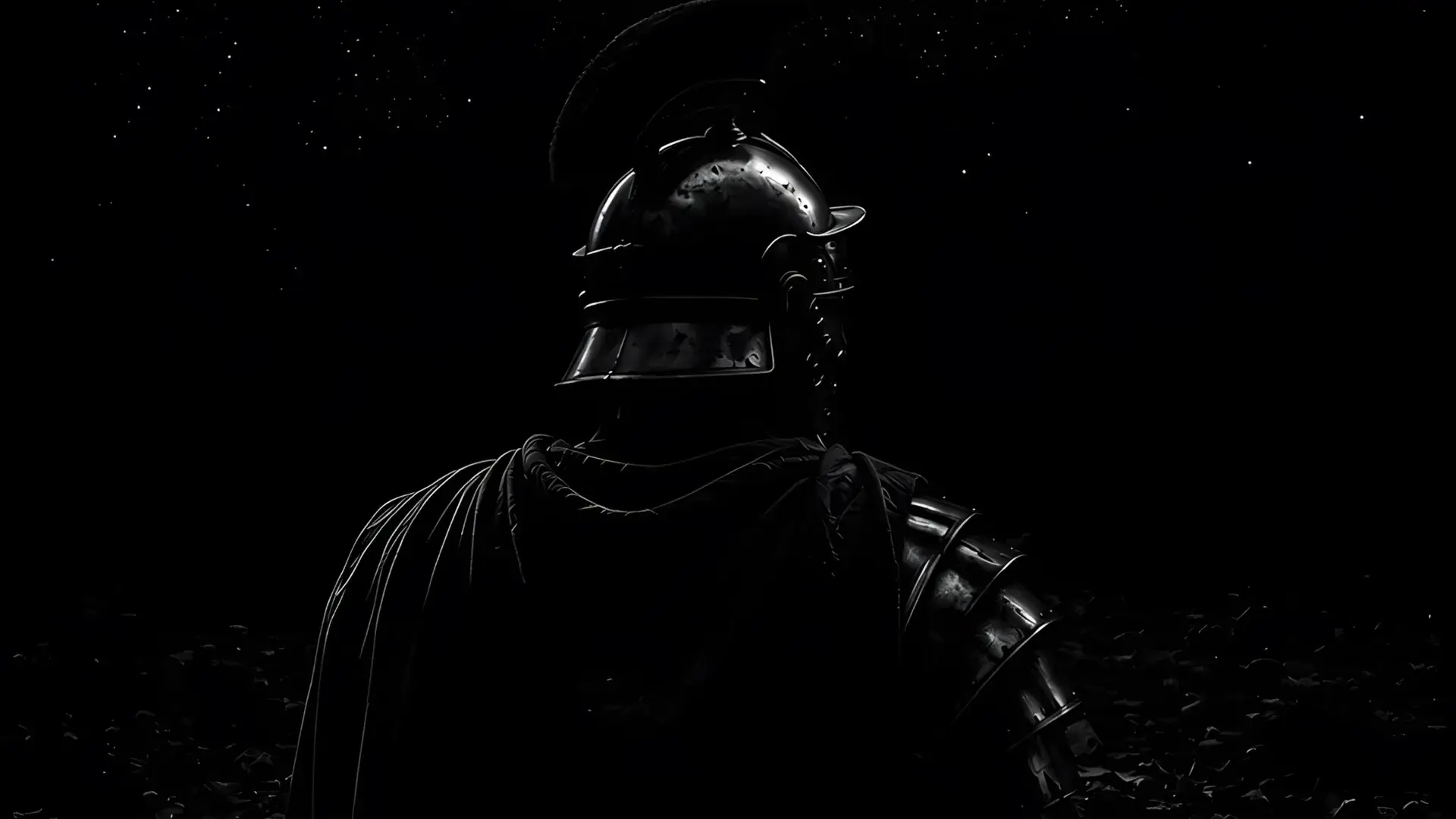
Every morning Marcus Aurelius might die.
He was the Emperor of Rome, and he was fighting wars on the northern frontier of his empire. They are called the Marcomannic Wars and they lasted over a decade. He commanded his armies personally. He was not directing this from Rome. He was there, in the camp, on the field, writing his private notes by lamplight at night before whatever the next day would bring.
Into that context he wrote Meditation VII.8:
Let not future things disturb thee, for thou wilt come to them, if it shall be necessary, having with thee the same reason which now thou usest for present things.
Don’t be disturbed by what hasn’t happened yet.
Because when you get there — if you get there — you’ll have the same reason you have right now.
What Reason Is Doing Here
This is the heart of the Stoic argument against fear, and it’s worth looking at this closely. It has to do with what Marcus means by ‘reason.’
He doesn’t mean intelligence, information, or knowledge of an outcome. He means the capacity to evaluate a situation and respond to it appropriately. The same faculty you use to navigate today’s problems will be available when the future arrives. That faculty is Reason – the ability of a human to apply logic, thinking, and figuring out conclusions from new or existing information.
Reason doesn’t disappear in the face of difficulty. Reason is exactly the thing you’ll need to deal with difficulty.
So fear —anticipating suffering about what might happen — is spending your Reason on tomorrow’s problems in advance without the information you’ll have when you actually get there. If you get there.
In other words, wasted Reason is wasted Time.
The Antidote Is Not Courage
People tend to frame the solution to fear as courage. Feel the fear and do it anyway. Push through. Be brave.
Marcus’ antidote is different. The solution isn’t courage, it’s Reason. Ask yourself: what am I actually afraid of? Name it. Not the vague dread, not the background anxiety — the specific thing. What is the actual scenario that’s disturbing you?
To Marcus, that thing was often “death” which is why he faces it over and over again in his Meditations.
Because once it’s named, Reason can examine it. How likely is it? How bad would it actually be? What would you do if it happened? Is there anything you can do about it now? These questions are Reason in action. When you are undergoing fear, you’re not asking questions: your running scared.
Most fears, when named and examined, either dissolve or shrink to a size where they can be addressed. The ones that don’t dissolve — a genuinely serious threats — can now be planned for rather than dreaded. Planning is a Reason thing. Dread is an emotional reaction thing.
Cancer. There’s a word that when uttered, puts people on notice and their fear swells up. But when you start reasoning about Cancer, you see it as it is: part of living. Something that happens in cells. Something that HAS happened throughout history to cells. Cancer becomes a question of data. A host of possible cures. Some cancers can be cured; others can’t – yet. Technology is moving at warp speed.
But so what? No one lives forever, and you can’t outrun father time. That’s what Reason helps you realize, logically and unemotionally. Cancer becomes just another word.
Reason doesn’t suppress fear. Reason examines the fear. Like a scientist.
What Marcus Was Actually Afraid Of
The Meditations are full of his reflections on death. Not just the deaths of others but his own. He knew he was going to die. He faced death every day on the battle field. He thought about it regularly. He didn’t pretend the thought wasn’t there.
In Zorba the Greek, Zorba says: “Do you act as if you will live forever or act as if you will die any minute?” There’s a difference in those philosophies. In Maupassant’s Old Man (on this website), an old man joins a community and tells the doctor he wants to keep close notes on everyone in the community: what they eat, when they sick, and when they die. He has taken care of himself all his life; never drank wine, never took risks. But now (he was in his 80s) he wanted to avoid death at all costs.
Of course, that’s impossible. And that’s the point of Marcus’ medications: there’s a difference between fearing death as an abstract concept and being disturbed by the specific knowledge you will die. The first Marcus had largely worked through the concept— his arguments about matter and transformation and the atoms of the universe address that. The second Marcus – fear of the “thing” –is what Meditation VII.8 is all about.
Tomorrow’s battle. Next month’s news from Rome. The slow deterioration of his own health. These are future things. They are real. They may be terrible. But they haven’t arrived yet. And when they do, he’ll have Reason.
He wrote that to himself before going to sleep on his campaigns. Jimmy reads them two thousand years later and finds them more useful than most things written this century on the same subject.
So you see, Marcus wasn’t afraid of death. He was afraid he wouldn’t be able to Reason around it.
The Test
Take whatever thing you’re afraid of right now. The thing that woke you up at three in the morning. The scenario your mind runs when it has nothing else to do.
Ask yourself: is this thing happening now?
If the answer is no — if this is a future thing, a possibility, a fear about what might come — then Marcus’ instruction applies. You will come to the thing, if the thing is necessary, having with you the same Reason you have right now.
You’re not going to arrive at the thing without your mind (or if you lose your mind, you’ll never know the thing arrived!). You’ll have everything you have now, plus the information you had then, plus whatever you’ve learned between now and when the thing shows up.
That’s not false reassurance. That’s the actual situation. Which is what Reason looks like when it’s working.
Read the Meditations with Jimmy at readingwithjimmy.com. Questions and reactions to [email protected].