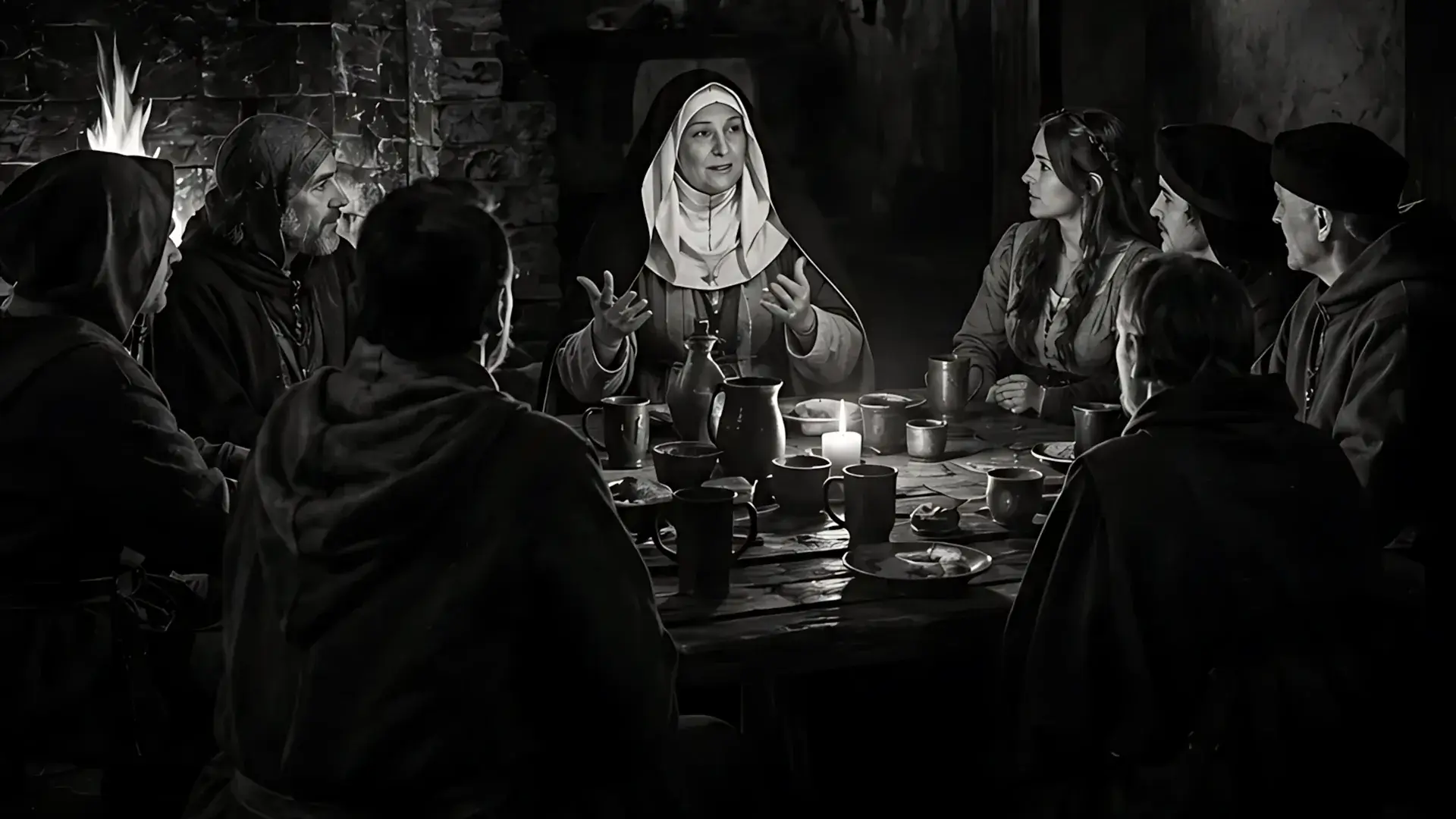
Before we go into the Prioress’ tale itself, it’s worth understanding what was already sitting on blackboards long before those tales were written. Because none of what the Prioress says about “Jews” in her tale was invented for the story. It was already on her blackboard. She didn’t erase it. She focused on it.
Where Antisemitism Started
Hatred toward Jews in the West didn’t begin with Christianity. It began actually with Rome. At its height, Rome ruled most of the known world, Judea among the conquered territories, and Roman religious life was tightly bound to the state — public worship of Zeus, Jupiter, and the rest wasn’t really a matter of private belief so much as civic participation, a way of securing the favor of the gods for the whole community.
Rome tolerated a great deal when they would conquer a people. This includes a people’s religion, customs, etc. However, Judaism was doing something that the Romans interpreted as a threat: they didn’t worship gods. They worshiped one God. That refusal to participate in Roman public religion felt, over time, less like piety and more like defiance — stubbornness, separatism, a community holding itself apart from the empire that ruled it.
Tensions that start as religious difference have a way of curdling into hatred. That’s what happened here, centuries before a single line of Canterbury Tales was written.
What Got Built On Top Of That
By the time we reach medieval Europe, that hatred for Jews had hardened into laws and customs. Jews were barred from land ownership across much of Europe and shut out of most occupations. They were segregated into ghettos — the word itself comes from this period. Moneylending, forbidden to Christians under the Church’s usury laws, became one of the few livelihoods left open to Jews — which then became, in an irony, its own source of resentment and stereotyping: the moneylender, the pawnbroker, cast as villain when, in fact, it was the only work available.
Starting in the twelfth century, a specific and vicious rumor began spreading across Europe: blood libel — the accusation that Jews murdered Christian children and used their blood in religious ritual. People believe that they want to believe even back then. Like all rumor, it had nothing as a basis in actuality.
The rumor spread anyway, town to town, the way rumors do when they confirm what people want to believe rather than what’s actually true. England expelled its entire Jewish population in 1290 as a result. France did the same in 1306. Spain followed in 1492 — the same year Columbus sailed to America.
One more belief separated the Jews from Christians: the believe that Jesus was the promised Messiah. Jews did not, and do not to this day believe that. But to a medieval Christian, that refusal read as one more willful reason to hate.
Why This Understanding Belongs in an Analysis of the Prioress
That’s what’s on the Prioress’ blackboard — the moneylender stereotype, the blood libel rumor, the sense of Jewish “separatism” as a kind of ongoing insult. In a word: antisemitism. Deeply ingrained. Irreversible.
So when the Prioress chooses this story out of every story available to a pilgrim on this road, the juxtaposition of her delicate nature to the violence in that tale is unmistakable. It is a remarkable tale that defines what Jimmy tells you all the time: you read classical literature to find out how others lead their life and how to lead your own. In this case, the real question is: what’s on your blackboard? And are you prepared to erase it to gain an understanding and appreciation of the Prioress.