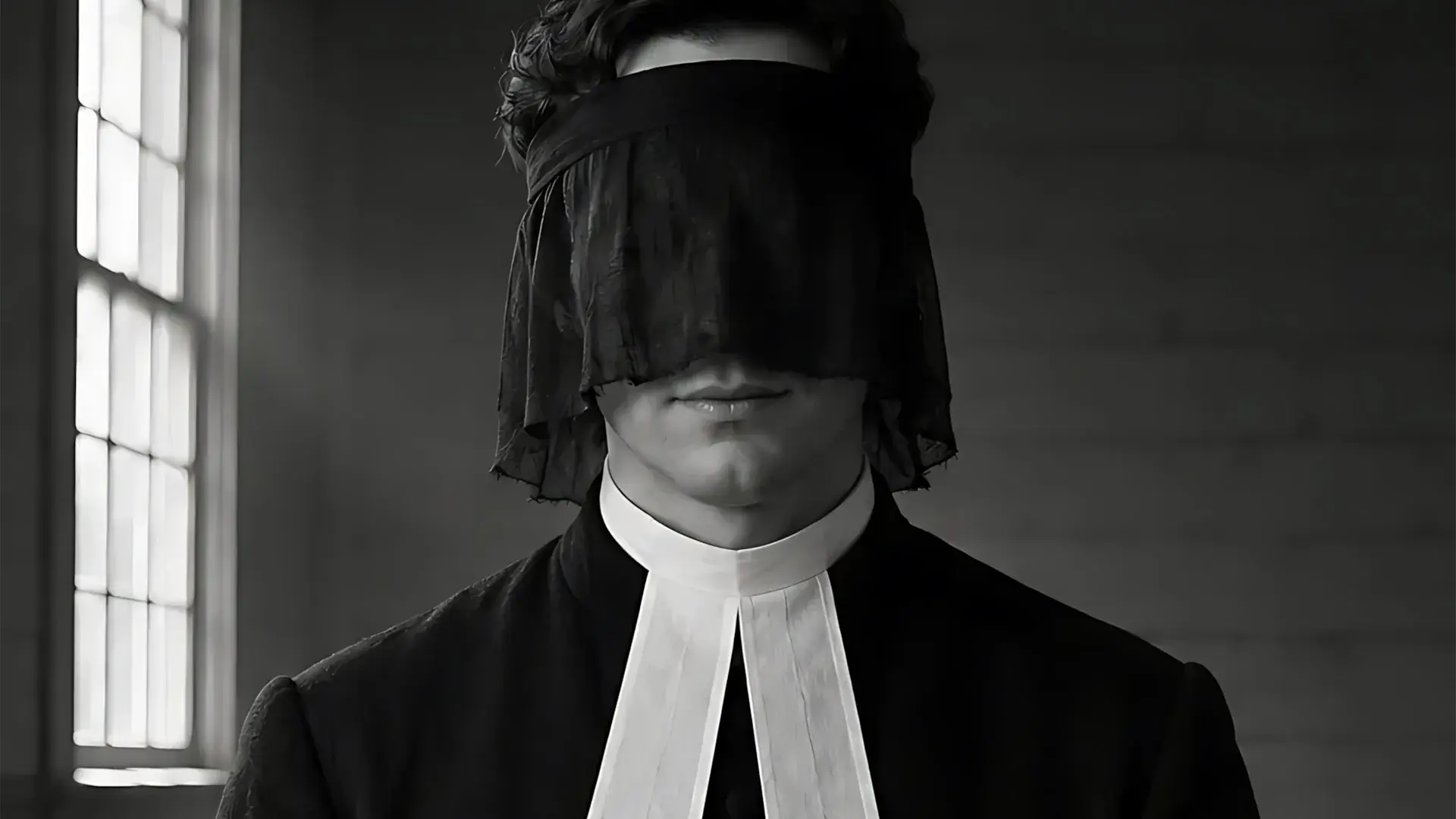
So what is the veil in this extraordinary The Minister’s Black Veil?
We never know why Hooper puts it on. We know he took a vow, that he never took it off, and that he was buried in it. What we do see is how people react to the black veil.
And that’s the key to understanding anything in life isn’t it: when somebody does something different, it causes a commotion. People like ritual and habit. Any departure from the normal is looked on with suspicion. Galileo told us the earth went around the sun and they threatened to burn him. They believed everything went around the earth…that we were the center of the universe. It was a big deal to challenge that and realize we’re not!
Before I explain my answer, here’s what the story tells us.
The veil comes between Hooper and his flock. When you look from behind it, you can see other people, but they can’t see you. When Hooper looks in a mirror, he runs away. At the wedding he catches his own reflection while toasting the couple, spills the wine, and runs out into the night. Why? From whom? The people don’t run from him, either. They run to him. He becomes a better preacher, and the dying call for him by name.
A symbol is a thing that stands for something else, usually a physical object standing for an abstraction. A veil covers, conceals, disguises. What does it conceal? The face, which is who you are. So here’s my suggestion: the veil is Hooper’s SELF. And because he says he sees all his people gathered around his deathbed have veils, to me, a symbol of me, of you, of the self, our essence is that veil. A veil that disguises not just you from others, but you from you.
Here’s why I believe that. Look at the next-to-last paragraph in the story, as Hooper lies dying and a young minister tries to lift the veil. Hooper clamps both hands over it. Then, turning to the circle of pale spectators, he cries: “Why do you tremble at me alone? Tremble also at each other! Have men avoided me, and women shown no pity, and children screamed and fled, only for my black veil? What, but the mystery which it obscurely typifies, has made this piece of crape so awful?” When the friend shows his inmost heart to his friend, the lover to his best beloved, when man does not vainly shrink from the eye of his Creator, “then deem me a monster, for the symbol beneath which I have lived, and die!”
And then the last line: “I look around me, and, lo! on every visage a Black Veil!”
We all wear a black veil. We hide ourselves from ourselves and from each other. It isn’t sin in the dictionary sense. It’s us. Why do we do it?
Fear of rejection. Vulnerability. We don’t want to be hurt. They all knew what Hooper looked like before that day, yet the veil shocked them. It had nothing to do with his appearance and everything to do with his soul. The veil became Hooper’s way of showing people to themselves, like a living mirror. Someone in the church even says it seems he’s looking into their souls. But they can’t see his eyes. It isn’t Hooper doing that. It’s the black veil.
This is introspection: the examination of your own mental and emotional processes. Looking inward instead of outward is very hard, and the black veil lets Hooper do it constantly, which, I’d argue, is how he became an outstanding preacher. On an airplane they tell you to put your mask on first, and then help others. You can’t help anyone if you haven’t done that. Put your veil on first. But be careful. Don’t start the indward journey unless you’re ready to finish it.
Others have said it better than I can. Kierkegaard a famous philosopher wrote that “the more a man understands himself through what he understands, the more easily he will discover that he is not understood — only those who themselves understand nothing can delude themselves into believing that everyone understands them.” And Kafka, in his Diaries: “You find yourself painfully pushed against the wall, apprehensively lower your eyes to see whose hand it is that pushes you, and, with a new pain in which the old is forgotten, recognize your own contorted hand holding you with a strength it never had for good work.” Read it again. We are our own worst enemy.
That’s why Hawthorne’s story works on so many levels, and why it makes us think. We put on our own black veils, or we strive to take them off. \
Read The Minister’s Black Veil with Jimmy, and ask which one you’re doing. And by all means, let me know what you think! [email protected]