Let’s get one thing straight before we go any further: Lysistrata is a comedy. Not a tragedy. Not a cautionary tale. A comedy. And it’s 2,400 years old, which should tell you something about human nature — specifically, that it hasn’t changed much.
Aristophanes wrote the play during the Peloponnesian War, when Athens and Sparta, along with their allies, had been grinding away at each other for years. His answer to all that bloodshed? A woman named Lysistrata with a very specific plan.
The Plan
Lysistrata’s idea is simple. The women of Greece — Athens, Sparta, all of it — will withhold sex from their husbands until the men agree to negotiate peace. That’s the whole play. That’s the engine.
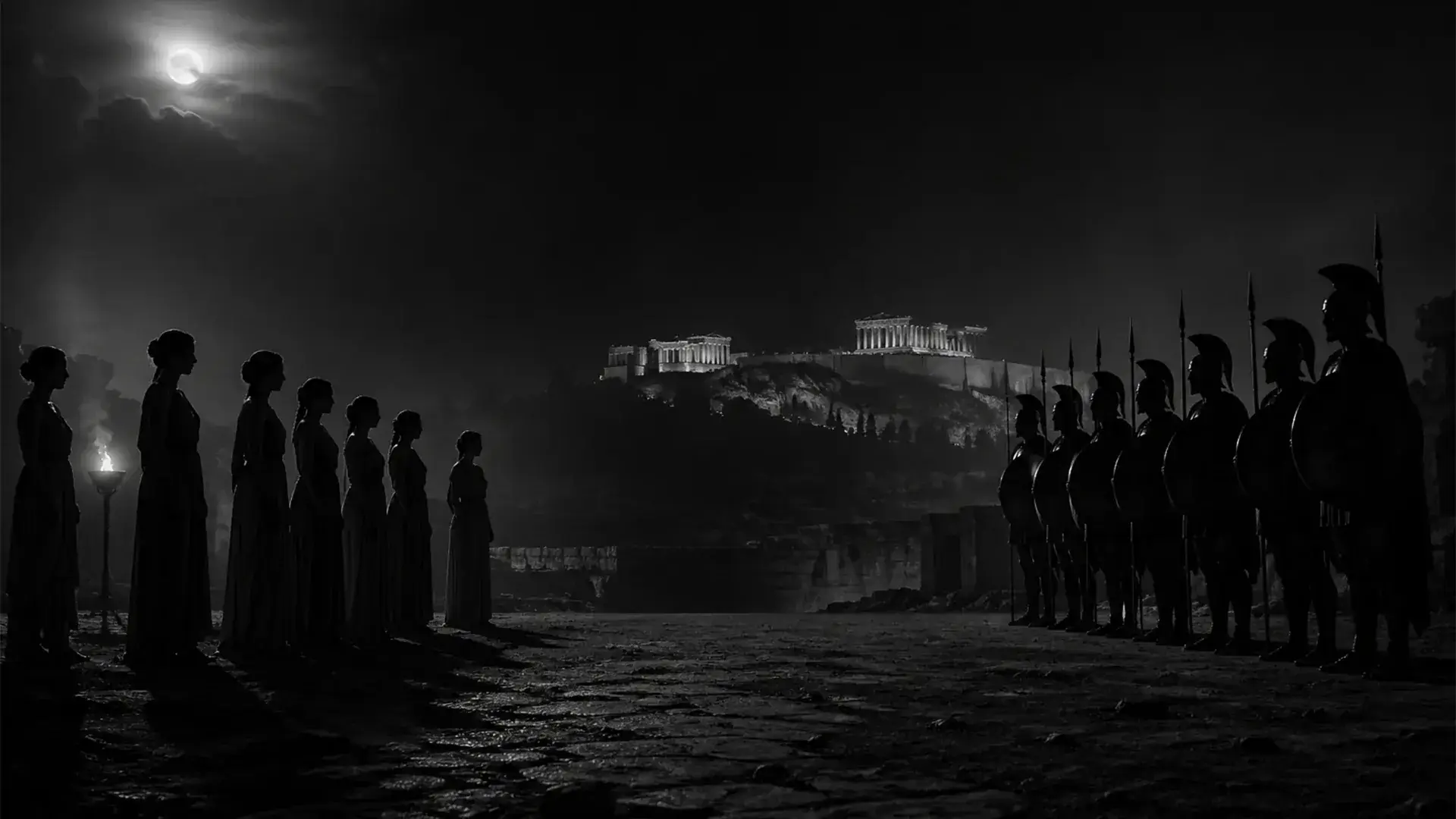
She rallies the women, they barricade themselves in the Acropolis, and the standoff begins. Men on one side. Women on the other. The war on hold.
What makes this work as comedy — what makes it still work — is the immediate conflict built into the premise. Aristophanes, through his third-person narrator, sets it up in the opening minutes. These women love sex. The narrator doesn’t leave you guessing. Lysistrata says flat-out that if she’d called the women to a Bacchic rite, or Pan’s Grotto, or the temple of Aphrodite, “you wouldn’t be able to move.” They’d be there.
You have to know what those three places were to get the full impact. The Bacchic rites: religious festivals for Dionysus, god of wine and ecstasy, involving music, drinking, dancing, and general wildness. Pan’s Grotto: the cave sacred to the half-man, half-goat god of uninhibited sexuality. The temple of Aphrodite: where women performed sexual acts for payment and gave the proceeds to the temple. Not a bake sale.
So Aristophanes has already established, before the plot even starts moving, that what Lysistrata is asking these women to give up is something they genuinely want. That’s the conflict. It’s real. It’s human. And it’s funny — because the only way to stop a war built on male pride is to take away something the men want just as badly.
A Battle of the Sexes
The play is a battle of the sexes. But don’t mistake it for something modern. These women had no legal rights. No political voice. No vote. They were responsible for managing the household and raising children, and that was about the extent of it. They were expected to be obedient to their husbands and to preserve the family’s reputation. That’s the world Aristophanes is writing in.
Which makes Lysistrata’s move all the more comic. She doesn’t have power — so she uses the one thing she does have. And it works. Or at least, the play lets us watch what happens when she tries.
The men charge in with logs to burn the women out. They choke on their own smoke. They get doused with water. The Commissioner shows up with all his authority and gets nowhere. The women hold.
Why This Play Matters
Here’s what Jimmy keeps coming back to when he reads Lysistrata: the play asks you a question. Not a comfortable one, but a real one. If the people fighting a war are also the people who want something badly enough to stop the war to get it — what does that say?
It doesn’t say war is funny. War isn’t funny. But the men in this play are funny, in the way that Aristotle described: “worse than they are.” Ridiculous. Laughable. Not evil — just stubborn, proud, and driven by exactly the kind of need that sits at the bottom of Maslow’s hierarchy.
Aristophanes didn’t write a policy paper. He wrote a comedy. And 2,400 years later, you can still see the joke.
Next up: Why the translator you choose changes everything you read — and what that tells us about so-called “editing” of classic literature.
Reading with Jimmy — readingwithjimmy.com | [email protected]