Post 3 of 5 in the Reading with Jimmy series on Edgar Allan Poe’s The Tell-Tale Heart.
By the time the narrator finishes his opening defense, we know he’s nervous, we know he hears things in heaven and hell, and we know he is absolutely certain he is not mad.
But we also know something he doesn’t: that he is crazy.
Next, he tells us why he killed the old man.
And this is where the story goes from unsettling to genuinely horrific.
No Object. No Passion. No Motive.
Listen to how he describes his situation before the murder:
“Object there was none. Passion there was none. I loved the old man. He had never wronged me. He had never given me insult. For his gold I had no desire. I think it was his eye! yes, it was this!”
Read that again. He is telling you he had no object — meaning no goal. No passion — meaning no emotion driving him. He loved the old man. There was no grievance, no insult, no financial motive.
And then, in the same breath: I think it was his eye.
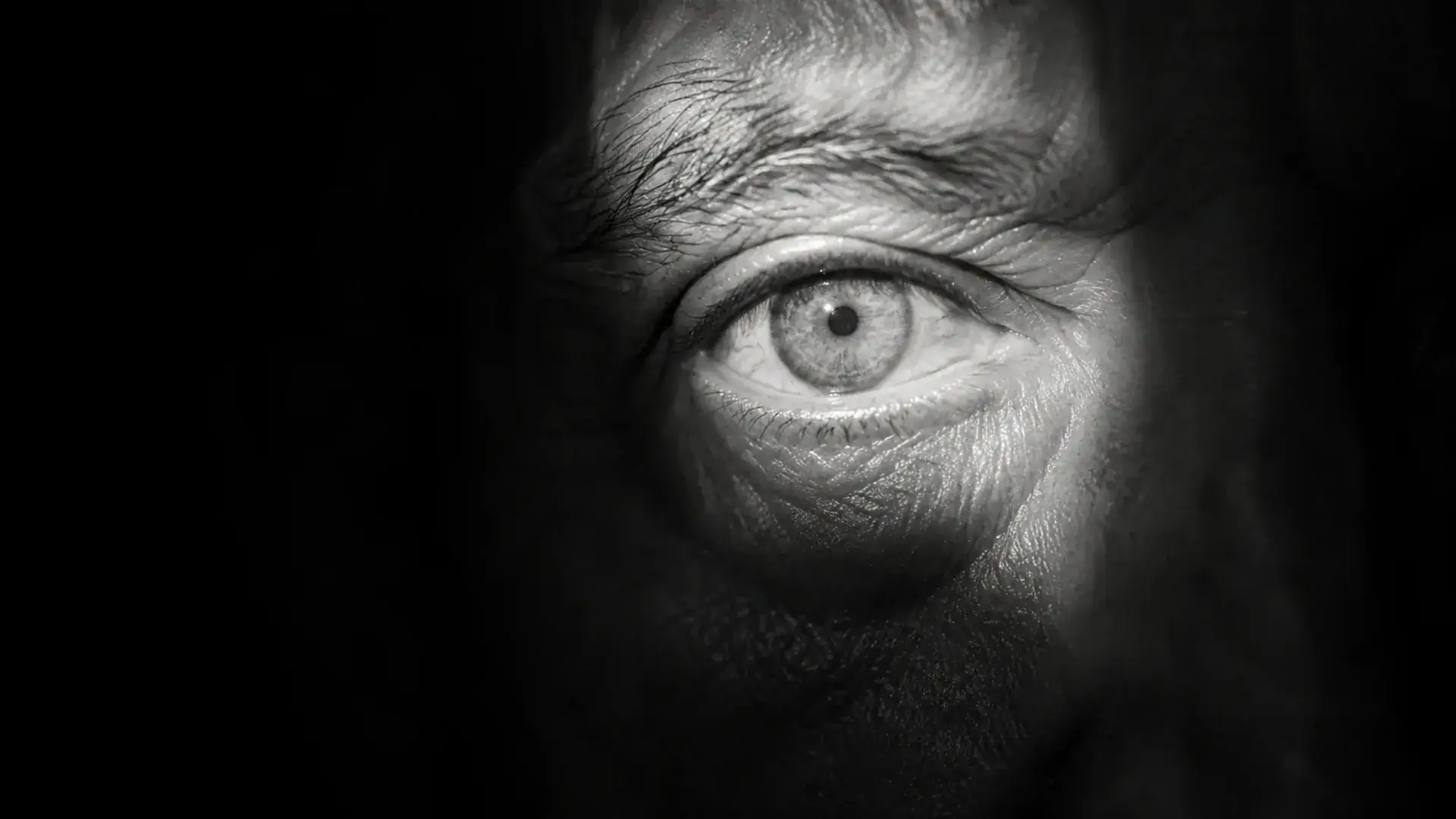
If there is no object, you cannot have an obsession. If there is no passion, you cannot have a fixation. But our narrator just described his object and passion: the old man’s eye. He says he is not obsessed. But the reality is, he is.
That’s not logic. That’s a mind that cannot see what it’s doing.
What Is an Obsession?
An obsession is an uncontrollable focus on an idea — persistent, highly disturbing, and almost impossible to stop even when the person knows it’s unreasonable. Think of Ahab in Moby Dick. The white whale took his leg. That’s a real grievance. That’s something you can point to. And Ahab’s obsession with the whale makes sense, doesn’t it?
Our narrator’s obsession has no origin he can name. He loved the old man. There was nothing wrong. And yet one eye — pale blue, filmed over, resembling the eye of a vulture — when that eye fell on him, his blood ran cold. It was the old man’s eye. It wasn’t like the old man harmed the narrator.
“Whenever it fell upon me, my blood ran cold; and so by degrees — very gradually — I made up my mind to take the life of the old man, and thus rid myself of the eye forever.”
There is nothing in the content of the story to explain this feeling other than what the narrator himself says. No backstory, no incident, no cause. The eye was just there, and it was intolerable to him, and so he decided to kill.
Does that remind you of anything? Have you ever had someone look at you the wrong way and felt that flash of irrational irritation? Most of us let it go. This narrator made up his mind to commit murder.
That’s the difference between a normal mind and the one we’re inside.
The Logic of a Madman
Here is where it gets philosophical. Having told us what he did, the narrator then explains why it proves he’s sane.
“How wisely I proceeded — with what caution, with what foresight, with what dissimulation I went to work! I was never kinder to the old man than during the whole week before I killed him.”
Dissimulation is the act of hiding your true feelings — being deliberately deceptive while appearing normal. He is describing his own deceit as evidence of his intelligence.
His logic goes like this:
Mad people do not act wisely.
I acted wisely.
Therefore I am not mad.
Does that hold up? Wisdom is the ability to make sound judgments by applying knowledge, experience, and insight. Is concealing your intention to murder someone wisdom? By whose definition?
He even asks it himself: “Would a madman have been so wise as this?” He is so convinced by his own reasoning that he cannot see it’s actually circular. He defines wisdom as whatever he did, and then uses that definition to prove he’s sane.
You will meet people like this. The logic sounds airtight until you look at what it’s built on.
Seven Nights
For seven nights the narrator crept into the old man’s room, opened the lantern just a crack, and shone a single sliver of light toward the old man’s eye. For seven nights the eye was closed. For seven nights he left without incident.
He says he stood perfectly still for over an hour each night.
Is that possible? Some people find it absurd. But military snipers hold completely still for hours — sometimes days — in a concealed position. Welders, security guards, surgeons: there are professions that demand a long, sustained, static focus. It is not physically impossible.
What makes it strange in this case is the purpose. Not patience in service of a mission. Patience in service of a fixation on an old man’s eye.
On the eighth night, something changed. The narrator made a small noise. The old man woke. He sat up in the dark, listening — and the narrator knew that feeling, because he says he knew it well himself: that terror of not knowing what’s in the dark with you.
And then the narrator heard it. A low, dull, quick sound. Like a watch when enveloped in cotton (which he says a couple of times). The beating of the old man’s heart. Or, at least he thought it was in his own mind!
We’ll talk about that heartbeat — and what it might actually mean — in the next post.
This is Post 3 of 5 in the Reading with Jimmy series on Edgar Allan Poe’s The Tell-Tale Heart. Continue with Post 4: “Inside or Outside? The First-Person Choice That Changes Everything.”
Read The Tell-Tale Heart with Jimmy on this website. Questions or comments? Write to Jimmy at [email protected].