A blog series on reading Alice in Wonderland to develop your critical thinking
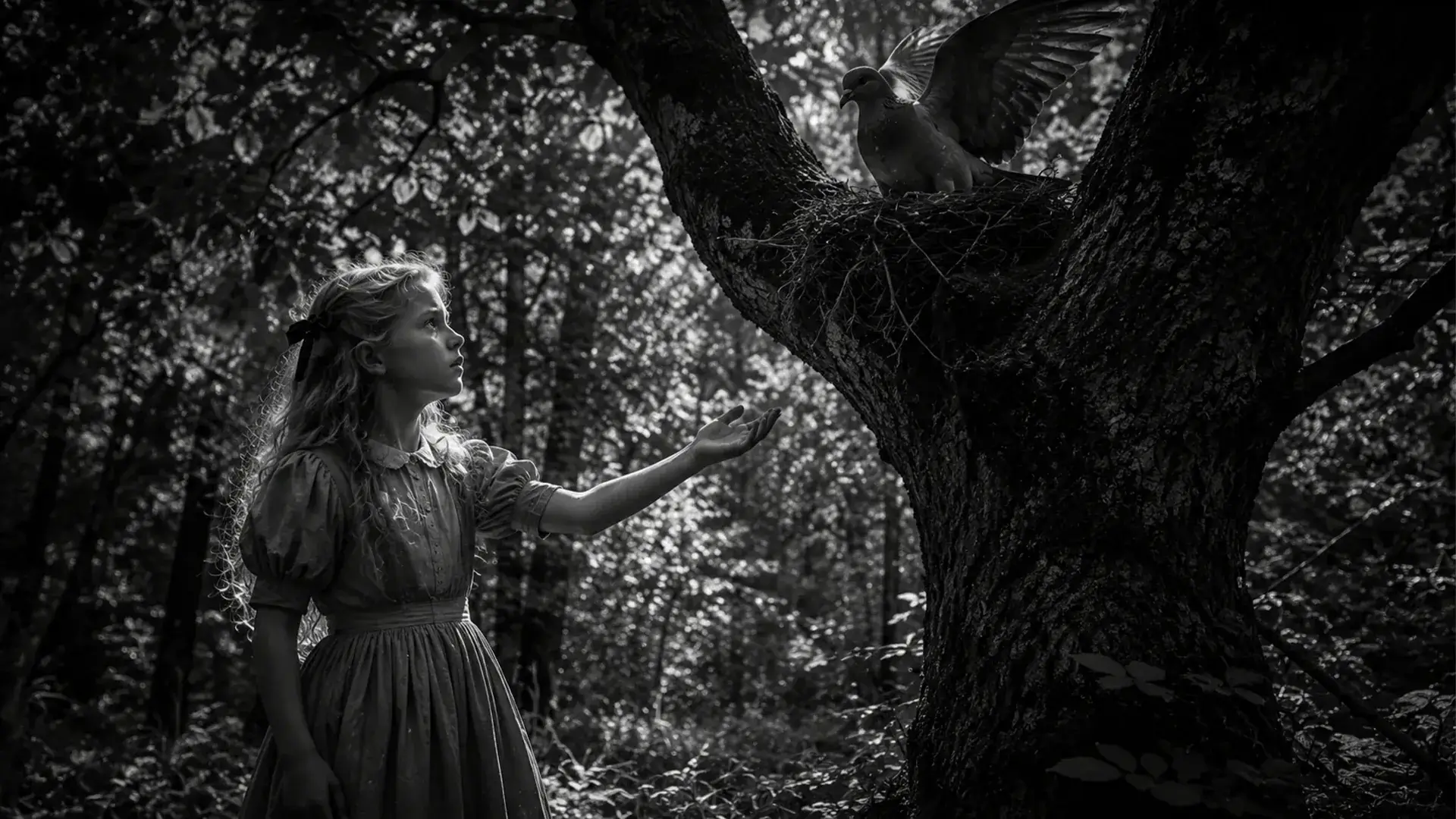
Alice has just escaped an argument with a caterpillar about who she is. She hasn’t resolved it. Now, making her way through the woods, she encounters a pigeon — a mother pigeon, sitting on her nest, furious — who takes one look at Alice’s long neck and reaches a conclusion: serpent.
Alice objects. She is not a serpent. She is a little girl. The pigeon doesn’t care.
What follows is one of the most practically useful arguments in the book — not because Alice wins it, but because she doesn’t, and the reason she doesn’t tells you something true about how the world actually works.
The Pigeon’s Logic Is Not Crazy
The pigeon’s case goes like this: serpents have long necks. You have a long neck. Serpents eat eggs. You admit you eat eggs. Therefore, you are a serpent — or at least, whatever you are, it doesn’t matter, because what you do is what concerns me.
Alice’s defense is that she is a little girl, not a serpent. The pigeon’s reply stops her cold: A likely story indeed! I’ve seen a good many little girls in my time, but never one with such a neck as that. And then the harder point: even if you are a little girl, you eat eggs. So what exactly is the difference, from where the pigeon is sitting?
Alice is stuck. She wants to argue from identity — I am a little girl, therefore I am not dangerous. The pigeon is arguing from behavior — you eat eggs, therefore you are a threat. Those are two different arguments, and neither one fully defeats the other. But in the pigeon’s world — a nest of eggs, a predator risk, no room for philosophical nuance — behavior wins.
You Are What You Do
Here is the concept worth holding onto: your actions define you. Not just the actions you intend. The actions others observe.
Alice was not looking for the pigeon’s eggs. She has no interest in eggs at this particular moment. Her intentions are entirely innocent. But she has a long neck — because the mushroom made it so — and she does eat eggs in her regular life, and she is in the trees near a nest. From the pigeon’s point of view, the evidence is not ambiguous.
This happens constantly, and not only in Wonderland. You do something — or fail to do something — and someone draws a conclusion about you from that action. You may not have meant it. You may have had perfectly good reasons. None of that changes what they saw. The action is the thing that exists in the world. The intention stays in your head.
Carroll is careful here. He doesn’t say the pigeon is right. He says the pigeon interpreted Alice’s actions as egg-hunting. That word — interpreted — is doing real work. It leaves room for Alice to be innocent and for the pigeon to be reasonable simultaneously. Both things are true. That’s what makes it uncomfortable.
The Caucus Race Proves the Same Point
A few chapters earlier, Alice and a collection of waterlogged animals climb out of her pool of tears and face a simple problem: they need to get dry. The Dodo proposes a caucus race. The rules of a caucus race are these: everyone starts when they like, stops when they like, and runs in a rough circle. After half an hour the Dodo declares it over.
Who won? The Dodo considers the question at length, pressing one finger to his forehead in the manner of Shakespeare in his portraits — the narrator’s little joke — and finally announces: Everybody has won, and all must have prizes. Alice thinks this is absurd. And it is. But notice what the Dodo has done: he has assigned meaning to a set of actions — running around in a circle with no rules — that had no inherent meaning at all. The race didn’t produce a winner. The Dodo decided there was one. Or rather, decided there were all of them.
The pigeon interprets Alice’s presence as threat. The Dodo interprets random running as victory. In both cases, the creature with the most at stake assigns the meaning. That’s not unique to Wonderland. That’s how interpretation works in every argument you’ve ever been in.
What Alice Learns From Losing
Alice doesn’t win the argument with the pigeon. She retreats from it — I’m not looking for eggs, as it happens. And if I was, I shouldn’t want yours: I don’t like them raw. That last line is pure Alice: technically true, slightly indignant, and a little funny. She can’t refute the pigeon’s logic entirely, so she finds the one factual point in her favor and lands on it.
But something has shifted. The pigeon’s challenge — what are you, really? — lands differently after the caterpillar asked the same question. Alice is beginning to understand that the answer she gives about herself and the answer the world arrives at from watching her are not always going to match. That gap — between self-knowledge and how you’re perceived — is one of the harder things a person learns. Most people learn it the same way Alice does: by losing an argument they were sure they should have won.
The Harder Truth
There is a harder version of the pigeon’s argument that Carroll leaves implicit. It goes like this: if you don’t act — if you fail to do something — that non-action also defines you. The mouse who walked away from Alice’s offhand mention of her cat wasn’t wrong to be offended. Alice said what she said. She forgot who she was talking to. That lapse, however innocent, produced a consequence. The mouse left. The conversation ended. That’s what inaction and carelessness cost.
Alice is learning — slowly, the way all of us learn it — that the world responds to what you actually do and say, not to what you meant. The gap between those two things is where most of the real trouble in life lives. Wonderland just makes it vivid.
You are not only what you eat. You are what you do. And what you don’t do. The pigeon knew that. She just didn’t put it kindly.
— Next in the series: Chaos Has a Logic — The Mad Tea Party and What It Reveals About Rules
Reading with Jimmy analyzes canonical texts through close reading of language, character, and structure. Watch the full video analysis at readingwithjimmy.com.