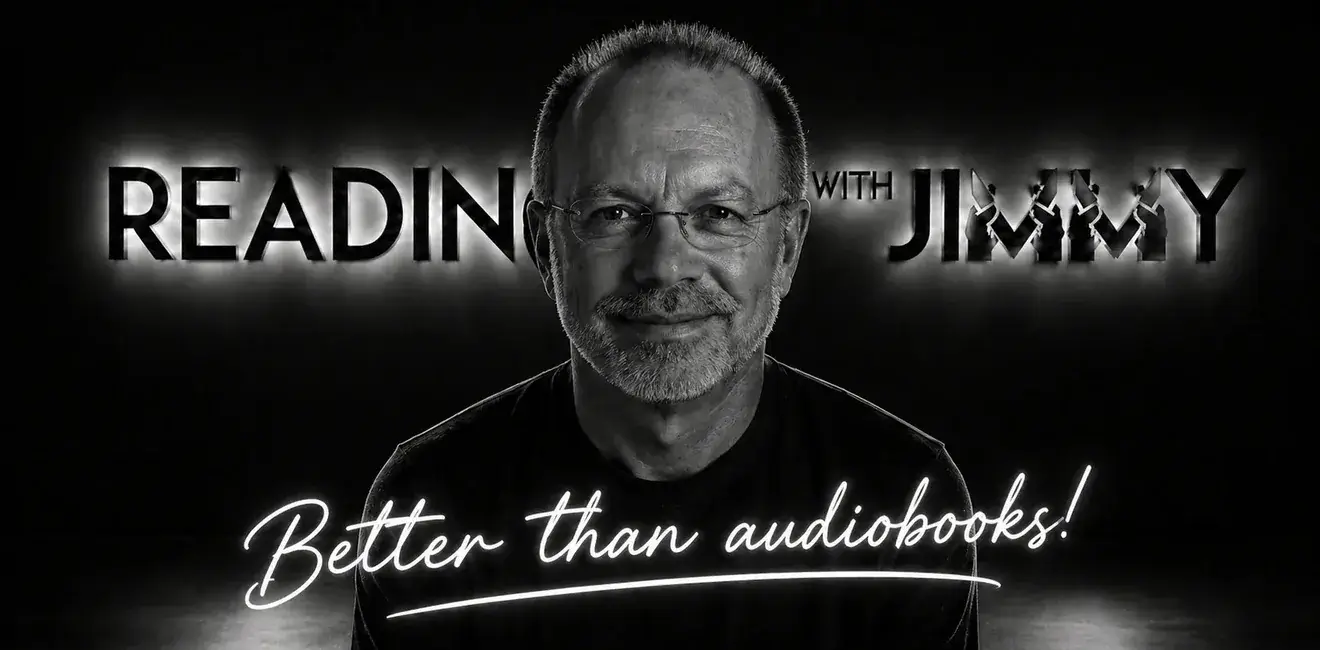
Why Reading with Jimmy Is Better Than Audiobooks
An audiobook reads to you. Jimmy reads with you. That’s not a small difference. When you listen to a narration, you follow someone else’s pace, someone else’s emphasis, someone else’s interpretation — without ever seeing the words on the page. Here, you see the text. You examine it. You discover what it means for yourself. And when the reading is done, the analysis begins. Jimmy takes every work apart — language, structure, character, meaning — because appreciation is the goal, not just exposure. No audiobook takes you there like Jimmy.