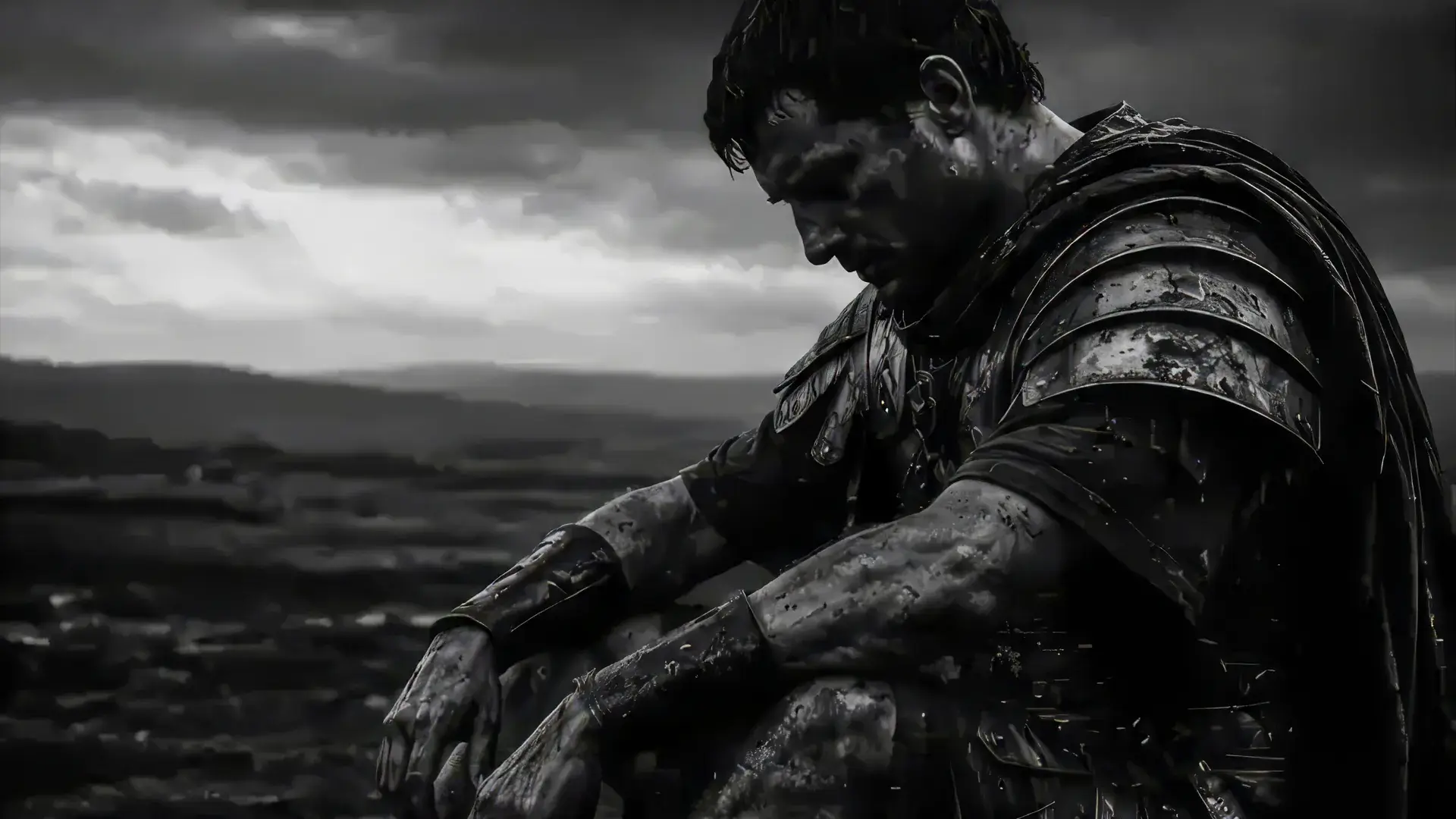
This is one of the harder things Marcus Aurelius wrote. Hard to accept, maybe even harder to understand.
Nothing happens to any man which he is not formed by nature to bear.
Meditation V.18. One sentence.
Read it again. Nothing that happens to you is beyond what nature built you to handle.
Not some things. Nothing.
The Book of Job
If you know the Book of Job — and Jimmy thinks every serious reader should — you know the story of a man from whom God and the devil took everything. His family. His wealth. His health. Everything was stripped away, one catastrophe after another, to test whether he would curse God or hold on.
Job bore it. Not because he was superhuman. Not because he didn’t suffer. He suffered enormously and said so at considerable length. But he bore it.
Marcus’ claim is that this is not exceptional. It is what nature produces in human beings by default. You are formed to bear what comes to you. The capacity is built in. What gets in the way of doing that or understanding that is not weakness — it’s something else.
The Harder Part
He adds it immediately after the first statement:
The same may happen to another, and either by ignorance that it has happened, or by a desire to make a show of greatness of soul, he is firm and undisturbed. Is it not a shame that ignorance and conceit should be stronger than wisdom?
In other words: some people bear the unbearable through ignorance — they don’t fully understand how bad it is. Others bear it through vanity — they want to appear strong. And both of those are more effective than wisdom – the realization that whatever happens to you happens because you can take it. So what gets in the way of realizing that?
That’s the sting isn’t it? Not that we can’t bear things. We can. We do. We’ve been doing it. The problem is that we bear them through the wrong mechanism — ignorance, performance, habit — rather than through the deliberate application of reason and understanding. Reason. The knowledge and argument that things happen. Acceptance.
Reason should be stronger than either ignorance or vanity. Marcus is saying it usually isn’t. And that is the shame.
The Opinion Problem
This connects directly to what Marcus argues throughout the Meditations about opinion. In Meditation IV.7 he writes that if you take away your opinion that something is harmful, the harm itself disappears. Which sounds like denial until you understand what he actually means.
He doesn’t mean the thing didn’t happen. He means that a thing that makes something unbearable is not the thing itself but the feeling you build around it in your mind. The judgment that this shouldn’t have happened. The certainty you feel that you can’t survive it. The identity you build around being a person to whom this happened and so bemoaning your fate.
Nature formed you to bear the event. The opinion is what makes it feel you can’t.
The Question Worth tackling
Think about the hardest thing that has happened to you. The thing that nearly broke you. The loss, the failure, the betrayal, the illness, the grief.
Did it break you?
You’re here. Reading this. Which means the answer is no.
You bore it. Maybe through ignorance, maybe through performance, maybe through pure stubbornness. But you bore it. Which means Marcus is right — you were formed to bear it, because you did.
The question he’s really asking is: can you bear the next thing with Reason instead of with whatever got you through the last one?
That’s the hardest question. It’s the one he was asking himself throughout the Meditations. And, it’s the one we should all be asking ourselves.
readingwithjimmy.com | [email protected]