Travel Is So Broadening — Or Is It?
A Reading with Jimmy Series Introduction
Most readers approach Travel Is So Broadening as light satire — a humorous portrait of a boastful traveler who never quite makes it where he claims to be going. The jokes seem obvious. The exaggeration is easy to spot. The narrator is ridiculous.
But Sinclair Lewis is not simply making fun of a man.
He is doing something more exact — and more uncomfortable.
He gives us a first-person narrator and then lets him talk. He does not interrupt him. He does not correct him. He does not condemn him. He simply allows Mr. Schmaltz to reveal himself through his own words — through his generalizations, his pride, his prejudices, his small cruelties, and his complete confidence that he has been “broadened” by experience.
The story is not about Yellowstone.
It is not about automobiles.
It is not even primarily about travel.
It is about what happens when a man speaks at length without ever listening — to others or to himself.
Across this short series of essays, we will examine three things:
- how first-person narration exposes character
- how language reveals moral blind spots
- why travel does not automatically produce growth
Because the most revealing journey in this story is not the one across state lines.
It is the one inside the narrator’s mind.
And it is narrower than he imagines.
In Travel Is So Broadening, Sinclair Lewis uses first-person narration to show that travel does not broaden character — it merely amplifies whatever character already exists.
The Man Who Talks: First-Person Narration and Self-Revelation in Travel Is So Broadening
In this first essay, we examine the voice of Travel Is So Broadening. Before we judge what Mr. Schmaltz thinks, we need to understand how he speaks. Sinclair Lewis lets a man talk — and in doing so, reveals far more about him than the man ever intends. This blog explores how first-person narration becomes the story’s sharpest instrument of exposure.
Before we talk about travel, we need to talk about the man.
Travel Is So Broadening is not really about Yellowstone. It is not about automobiles. It is not about fried chicken dinners or spare tires or cornfields in Minnesota.
It is about a voice.
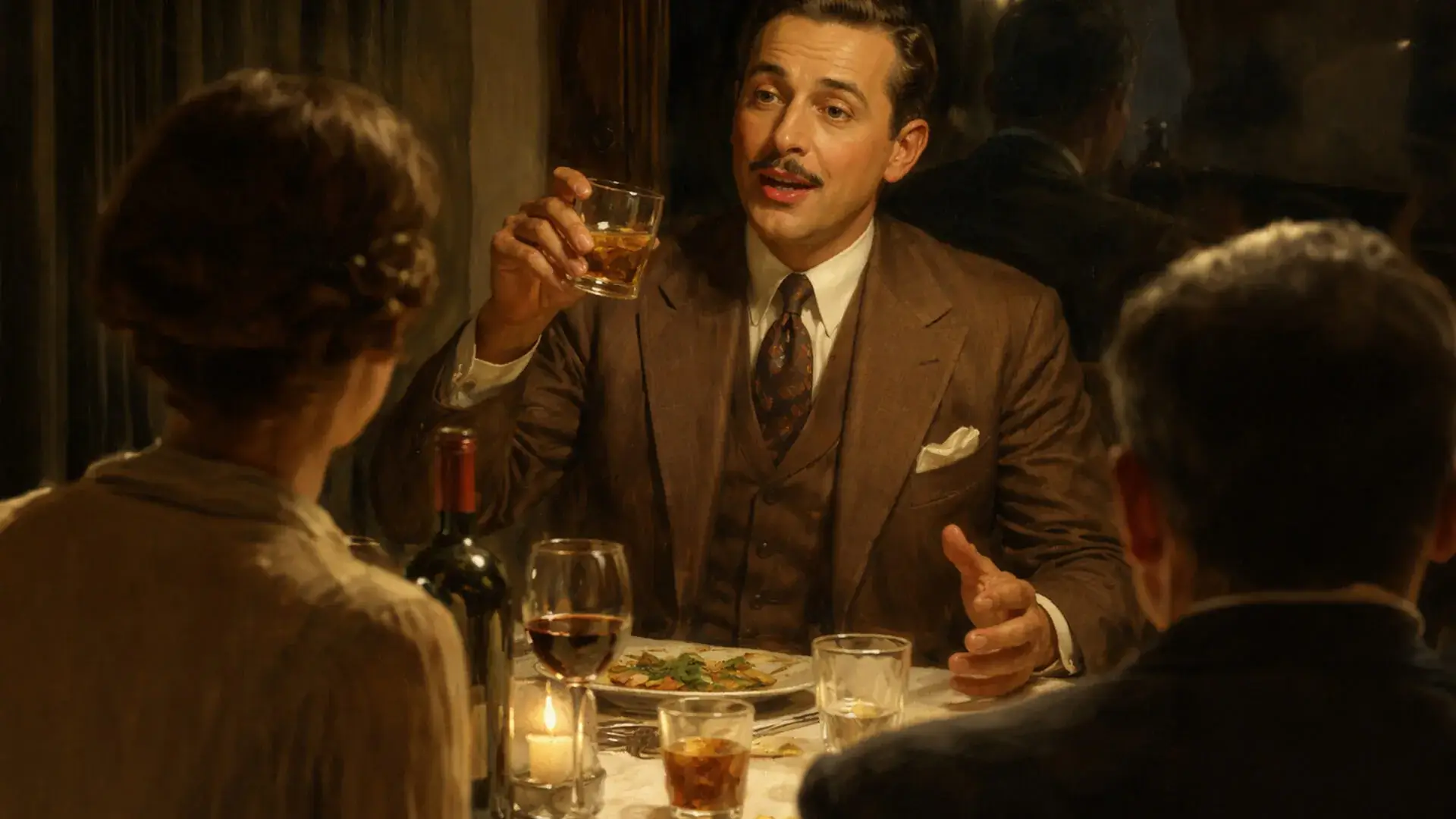
The story begins with a first-person narrator: “I want to tell you…” And from that first sentence forward, we are no longer reading an objective account of events. We are listening to a man talk.
That distinction matters.
First Person Changes Everything
When a story is told in the third person, we are meant to trust the narrator. If the narrator says Job was a good man, the story depends on us believing it. If the narrator describes a landscape, we accept it as the world of the story.
But in first person, something changes.
The narrator is inside the story. He is not outside it. He has motives. He has blind spots. He exaggerates. He edits. He selects.
And that means we must ask the most important question in any first-person narrative:
Who is speaking?
In Travel Is So Broadening, the answer is clear within the first paragraph. We meet Mr. Schmaltz. We learn his wife’s name. We learn his hosts’ names. We learn that he is complimenting dinner. We learn that he is eager to speak.
And then he begins.
A Man Reveals Himself by Talking
Sinclair Lewis does something precise here. He does not describe Schmaltz from the outside. He does not say, “Mr. Schmaltz was boastful,” or “Mr. Schmaltz lacked self-awareness.”
He simply lets him talk.
And what does Schmaltz talk about?
Mileage.
Equipment.
His brother-in-law’s failures.
The inferiority of farmers.
How cleverly he negotiated for shoes.
How he “taught” a hobo a lesson.
How he damaged another man’s tire and laughed about it.
The longer he speaks, the clearer he becomes.
He never says, “I am superior.”
But he speaks as though he is.
He never says, “I enjoy humiliating people.”
But he describes their embarrassment with satisfaction.
He never says, “I exaggerate.”
But his comparisons reveal constant inflation.
This is the genius of first-person narration: the narrator does not have to confess. He convicts himself.
Reliability Is the Silent Question
In first-person narration, reliability is always at stake.
Do we believe Mr. Schmaltz drove exactly as he says?
Do we believe he “barely touched” that other car?
Do we believe he was simply offering helpful advice to the hobo?
Or do we see – and feel — something else?
Notice how often Schmaltz insists on his own fairness.
Notice how frequently he explains that he was “perfectly polite.”
Notice how carefully he frames every conflict as someone else’s fault.
The need to justify is itself a revelation.
When a narrator must continually reassure us of his dignity, we begin to suspect it.
Lewis never interrupts to correct him. That is important. There is no outside voice saying, “He was wrong.” There is no moral commentary imposed from above.
The reader judges.
And that judgment emerges not from what Schmaltz says about himself, but from how he says it.
The Power of Letting a Man Speak
Some readers want satire to be louder. They want the author to signal clearly: “This man is ridiculous.”
Lewis does something more sophisticated.
He trusts language.
He understands that people give themselves away. Through tone. Through word choice. Through repetition. Through what they choose to emphasize.
Schmaltz cannot stop talking about:
- how far he drove
- how wisely he prepared
- how inferior others are
- how much he “learned”
But what does he actually reflect on?
Almost nothing.
He never pauses to ask if he might be wrong.
He never wonders whether he misjudged someone.
He never considers that his own behavior might require revision.
He speaks. And speaks. And speaks.
And in doing so, he narrows himself.
Travel Has Not Broadened Him — It Has Exposed Him
The title promises expansion.
The narration delivers contraction.
The more Schmaltz talks about how travel has broadened him, the more we see the limits of his awareness.
And that is the point.
First-person narration does not merely tell us where a man has been. It shows us who he is when he believes no one is challenging him.
By the end of the story, we know far more about Mr. Schmaltz than he knows about himself.
And that is not because he traveled.
It is because he talked.
In the second essay, we will explore Generalizations, Cruelty, and the Illusion of Moral Superiority, where the ethical consequences of this narration become unavoidable. Thanks for reading!