In Meditation I, Marcus lists the qualities he wanted to learn from the people around him. Some of these are expected: self-restraint, patience, evenness of temper. Some are not.
One stopped Jimmy when he first read it.
From him I learned to be able to see clearly in a living example that the same man can be both resolute and yielding.
Resolute and yielding. Both. At the same time.
Most people treat these as opposites. You’re either firm or you’re flexible. You either hold your ground or you give way. Marcus says no — the mature person is both at once. And the question he’s really asking is: which quality is actually in control when you yield?
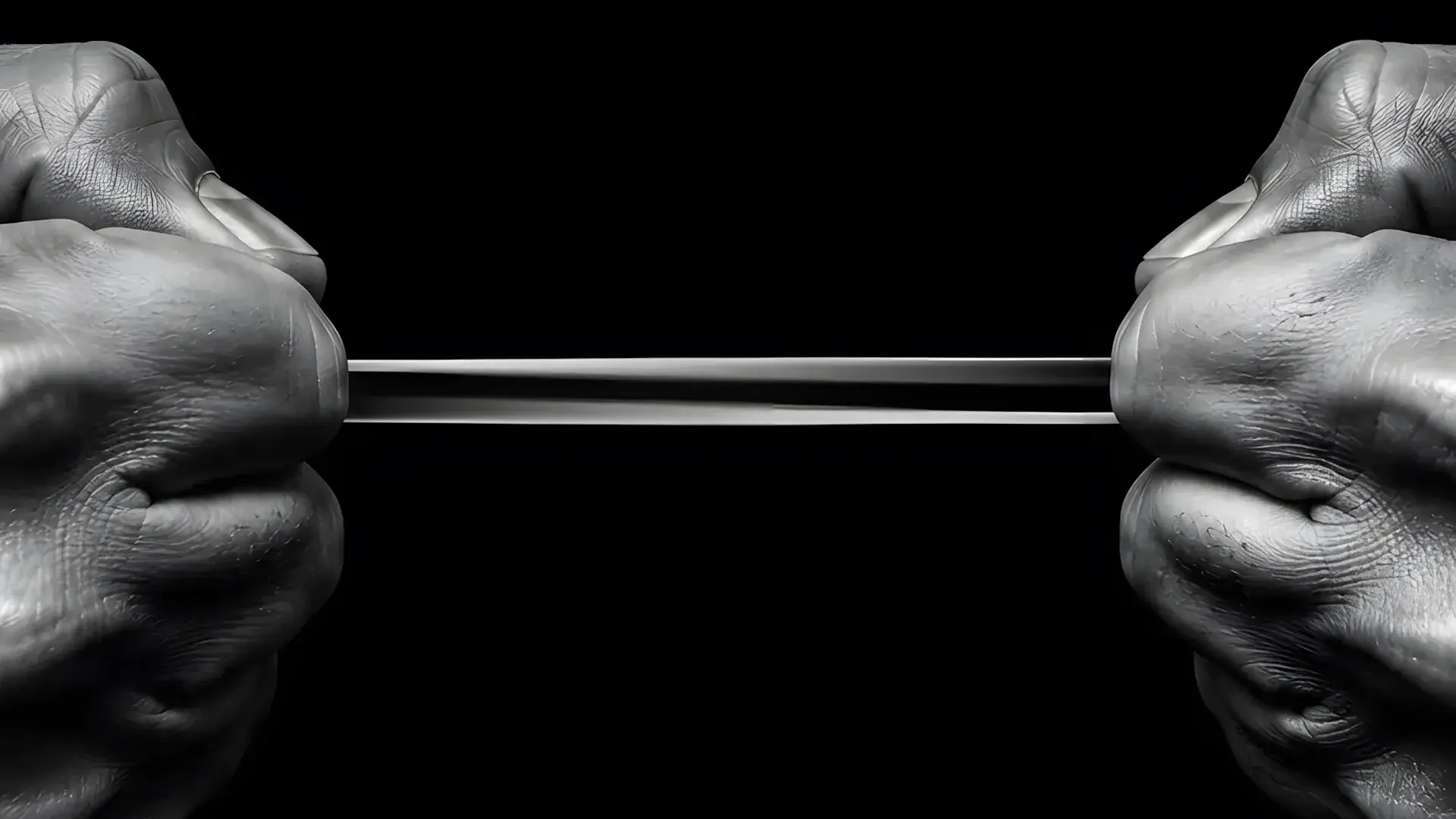
The Rubber Band
Take a rubber band. Hold one end. Jimmy holds the other.
Jimmy starts pulling.
If you resist — if you pull back — tension builds. The rubber band stretches. At some point it breaks. Neither of you got what you wanted.
Now try something different. Jimmy pulls. You let yourself be pulled. You move in the direction of the tension rather than against it.
No tension. The rubber band stays intact. Jimmy can pull as long as he wants as long as you allow it.
Now: who is in control?
Jimmy thinks he is. He’s the one pulling. But the person being pulled is choosing to yield. The yielding is not compelled — it’s decided. At any moment, that person could stop yielding, and the whole dynamic changes.
The person being pulled is in control because the person being pulled is choosing.
What Stoics Mean by Control
This is the center of Stoic philosophy, stated in its most practical form.
Epictetus, who was Marcus’s great teacher through his writings, divided the world into two categories: things within your power and things outside your power. Within your power: your opinions, your desires, your responses. Outside your power: everything else — other people’s behavior, external events, the past, the future.
The rubber band illustrates this in physical terms. The pulling is outside your power — that’s what Jimmy is doing, and you can’t control it. Your response to the pulling is entirely within your power. You can resist or yield. If you resist and the band breaks, you’ve lost something trying to control what you couldn’t control. If you yield, you’ve preserved something by controlling the only thing you ever actually had.
What Resolute Means in This Frame
The word ‘resolute’ in that Meditation I entry doesn’t mean stubborn. It means clear about what you’ve decided. Firm in your values and intentions.
You can be resolute in your values while yielding in your behavior. Think about that. You can decide that cooperation matters, that this relationship matters, that this outcome matters more than winning this particular exchange — and yield accordingly. The yielding comes from the resolution, a decision. It’s not weakness masquerading as strength. It’s strength expressed as flexibility.
Marcus saw this in someone around him and wrote it down because he wanted it for himself. Which means it didn’t come naturally to him. The Emperor of Rome, one of the most powerful men who ever lived, was trying to learn how to yield without losing himself.
That’s worth thinking about.
The Practical Test
The next time someone pulls at you — an argument, a demand, a situation that wants to make you tense — try asking yourself: am I resisting because this is actually wrong, or because being pulled is uncomfortable?
If it’s the first, hold your ground. Resolute.
If it’s the second, yield. And notice, as you do, that you’re the one making the choice.
That’s what Marcus was trying to learn. It’s still available.
Read the Meditations with Jimmy at readingwithjimmy.com. Questions and reactions to [email protected].