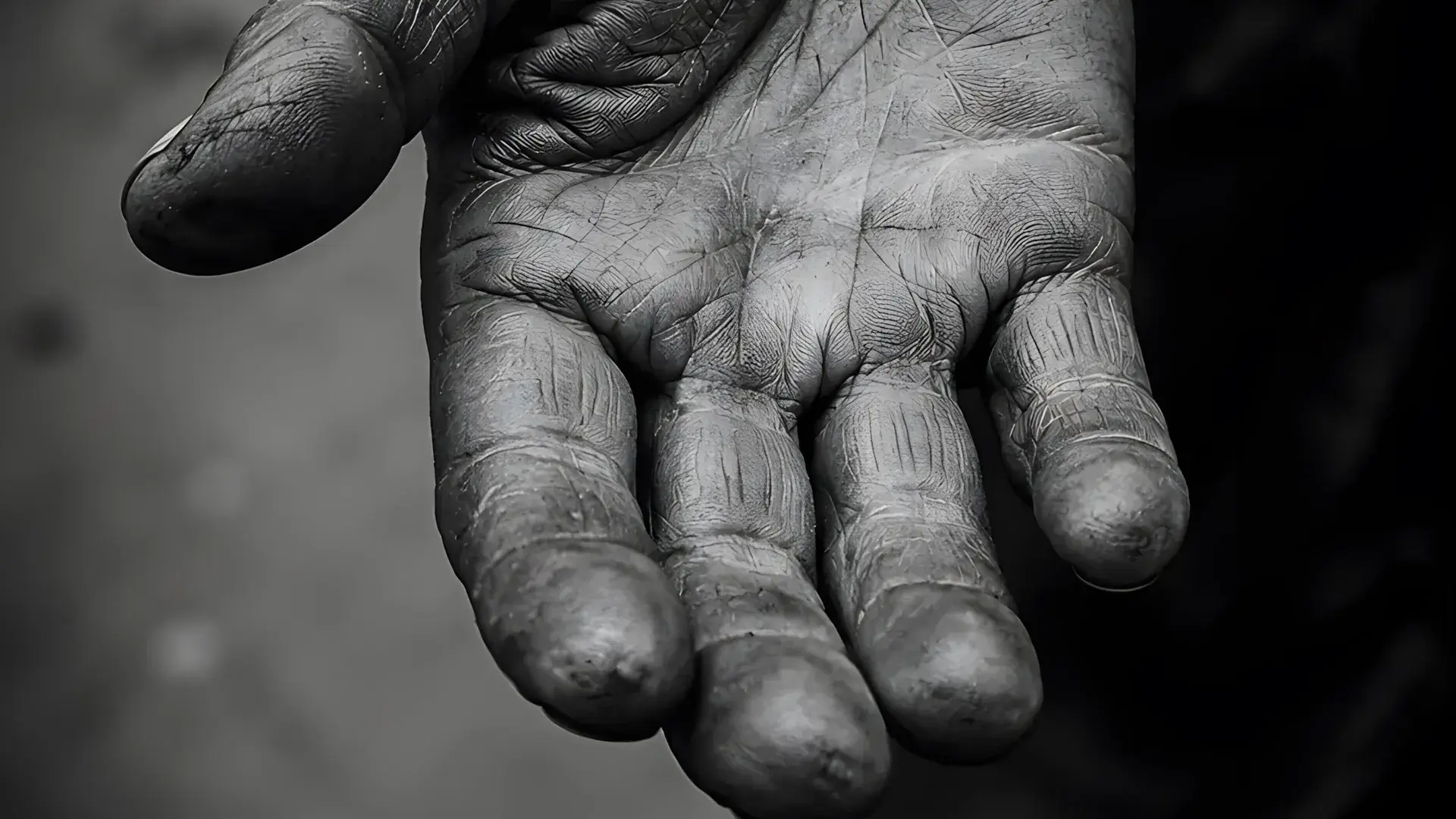
We were coming off the highway in San Francisco. There was a man on the corner.
Homeless. Dirty. He had an empty McDonald’s cup in one hand and was holding on to a lamppost with the other. As the cars slowed for the stop sign, he leaned toward them and held out the cup.
He said one word.
“Amnesty.” He’d wait a second and repeat it, “Amnesty.”
Jimmy gave him a dollar. My wife said: why are you giving him money?
Jimmy said: “Look at him. He’s a human being. And he’s been reduced to holding on to a pole with a cup.”
The Question Marcus Would Have Asked
Marcus Aurelius wrote in Meditation II.1 that we are made for cooperation — like feet, like hands, like eyelids, like the rows of the upper and lower teeth. To act against one another is contrary to nature.
That man on the corner wasn’t asking for charity. He was asking to be seen.
There’s a difference. Charity is a transaction. Being seen is human. He had one word and he chose Amnesty — not help, not money, not please. Amnesty. A word that means: stop holding what I am against me. Forgive me.
Marcus Aurelius, writing on a battlefield eighteen hundred years before that corner in San Francisco had already worked out the philosophical structure of that request.
We are made for co-operation. Not I and people who look like me. Not I and people who have earned my cooperation. All of us.
This is not a comfortable idea. It’s designed to be uncomfortable.
The Kinship Problem
In the same entry of Meditation II, Marcus writes that people who do wrong are “akin to me” — not in blood or heredity, but because they share intelligence and a portion of divinity. Which means that anyone who participates in reason — anyone who can think, anyone who can suffer, anyone who can ask for anything with a word — is connected to him. To all of us.
Jimmy’s wife that day in San Francisco suggested: “We should only care about our relatives. Only our own people.”
Marcus anticipated this argument too. His answer: then when you do that – select — you’re acting against nature. Because acting against one another — getting vexed, turning away — is what we’re not built for.
The man with the cup had been turned away enough times that he’d summarized his request, his position, down to one word. He knew what he was asking for. Maybe he didn’t know why. He was asking for forgiveness. He knew most people wouldn’t give it to him.
He still asked. He he is human.
What Cooperation Actually Costs
It’s easy to read Marcus on cooperation and think it’s abstract. Inspirational. Something you put on a wall or say at a dinner party.
It’s not. Cooperation costs something. It costs you the right to be vexed without examining the vexation. It costs you the easy way out of walking away. It costs you, in some cases, a dollar and a few seconds of actually looking at another person. It might even cost you something more.
Marcus knew this. That’s why he wrote it to himself every morning. The argument didn’t come naturally. He had to construct it, out loud, before the day started, because the day would give him plenty of reasons to abandon it. And that’s what you’ll read with Jimmy.
Why One Word is Enough
Jimmy has thought about that corner in San Francisco more than once since that day. The thing that stays with him isn’t the cup or the pole or even the dollar. It’s the word.
Amnesty.
In Brothers Karamazov, there’s a character called Father Zossima. He’s a monk. In one discussion, he tells someone: “All we can do is kiss the ground and beg forgiveness.” A powerful sentence. Something that lies at the root of all of the Meditations.
That man could have said anything. He could have said please. He could have said help. He could have said nothing and just held out the cup.
He said Amnesty. Which means he had thought about what he was asking for. He had found the word that named it exactly. And the word he found was the same thing Marcus Aurelius was arguing for eighteen hundred years earlier on a battlefield on the Danube.
Stop holding what I am against me. We were made for this. For cooperation. Not against it.
They would have understood each other.
Read the Meditations with Jimmy at readingwithjimmy.com. Questions and reactions to [email protected].