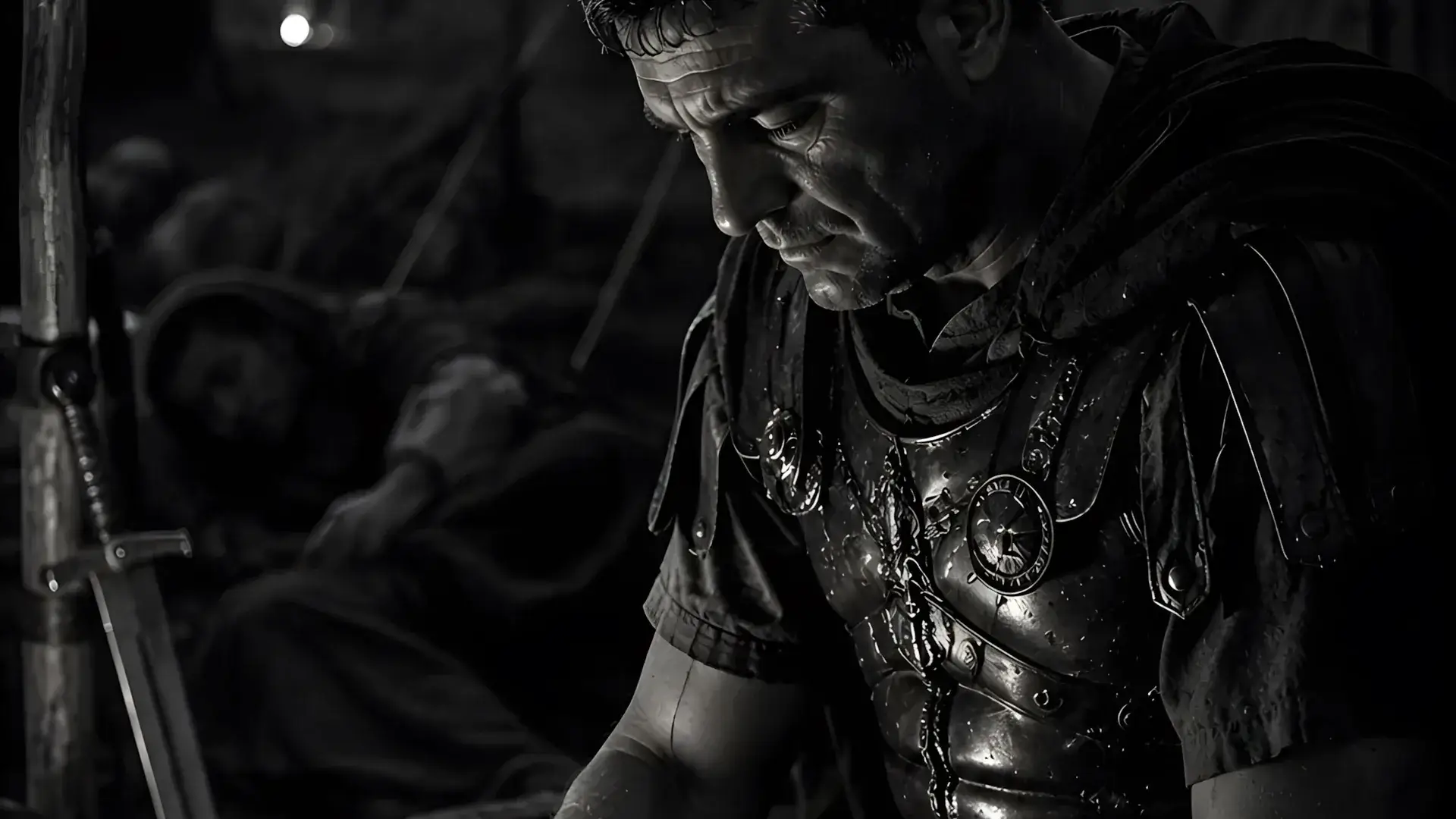
The Meditations of Marcus Aurelius are the private notes of a Roman emperor writing to himself on military campaigns in 170 AD. He never intended them to be published. These blogs are based on his work, translated by George Long. Marcus wrote them in Greek.
Before the meetings. Before the dispatches arrived from the Danube. Before anyone asked him for anything — Marcus Aurelius, Emperor of Rome, wrote himself a reminder.
Not a to-do list. Not a strategic plan. A warning.
Begin the morning by saying to thyself, I shall meet with the busybody, the ungrateful, arrogant, deceitful, envious, unsocial. All these things happen to them by reason of their ignorance of what is good and evil.
Read that carefully. He’s not complaining. He’s preparing.
The Emperor of Rome — the most powerful man on earth in 170 AD, commander of legions, ruler of millions — is sitting alone before dawn and reminding himself that today he will meet people who are ungrateful, arrogant, and deceitful. Not if he’s unlucky. Inevitably.
What do you say to yourself in the morning?
The Reasoning
Marcus doesn’t stop at the warning. He follows it immediately with an argument. These people are the way they are, he writes, because they don’t know the difference between good and evil. That’s his explanation. Not that they’re malicious. Not that they’re beyond help. They’re ignorant.
And because they’re ignorant, he concludes he can’t really be angry with them. Can’t hate them. Because—and here’s the line that carries everything—
We are made for co-operation, like feet, like hands, like eyelids, like the rows of the upper and lower teeth. To act against one another, then, is contrary to nature; and it is acting against one another to be vexed and to turn away.
When you get angry and walk away from someone, Marcus says you’re acting against your own nature. Against what human beings are made for.
That’s not a therapeutic sentiment. It’s structural. Cooperation is what we’re built for the same way teeth are built to work in rows. When you stop cooperating — when you turn away in anger, when you dismiss someone because they don’t understand you — you’re not just having a bad day. You’re going against the design.
The Question Behind the Question
Some people hear this and say: it’s easy for him to talk. He’s the Emperor. What’s he got to deal with?
Everything. He’s got everything to deal with. Barbarian invasions on the northern frontier, a plague moving through his armies, an empire that required daily management, and people around him who were — by his own account — ungrateful, arrogant, deceitful, envious, and unsocial.
The fact that he’s the Emperor doesn’t make the argument easier. It makes it harder. He has the power to punish anyone who offends him. He has the authority to remove anyone who irritates him. He could, at any moment, choose not to cooperate.
He chose not to choose that.
Every morning. Before anything else. He reminded himself why.
What George Long Saw
George Long, whose translation of the Meditations Jimmy reads on this channel, put a footnote to that first entry of Meditation II pointing back to Xenophon’s Memorabilia — specifically a passage in which Socrates counsels a struggling man to attach himself to considerate masters, do his best, and in doing so escape censure and find ease and security. The link between that passage and Marcus’s opening is not accidental. Marcus had read Socrates. He was working in a tradition.
The tradition is this: the examined life begins before breakfast.
A Rule, Not a Philosophy
It’s tempting to read Marcus Aurelius as philosophy — abstract, distant, theoretical. He isn’t. He’s writing rules. Rules to himself. Rules that he apparently needed to repeat, because the Meditations are full of repetition — the same ideas circling back, restated, applied differently, tried from another angle.
That’s what it looks like when someone is actually trying.
The rule Marcus writes for himself in that first entry of Meditation II is simple enough to say out loud: the people I’m going to meet today don’t know what I know about good and evil. So I can’t be angry at them. Because we’re made to work together. Not apart.
You don’t need to be the Emperor of Rome to use that rule.
Try it tomorrow morning. Before anything else.
This is the first in a series of blogs analyzing the Meditations of Marcus Aurelius. Read the Meditations with Jimmy at readingwithjimmy.com, and send your reactions to [email protected].