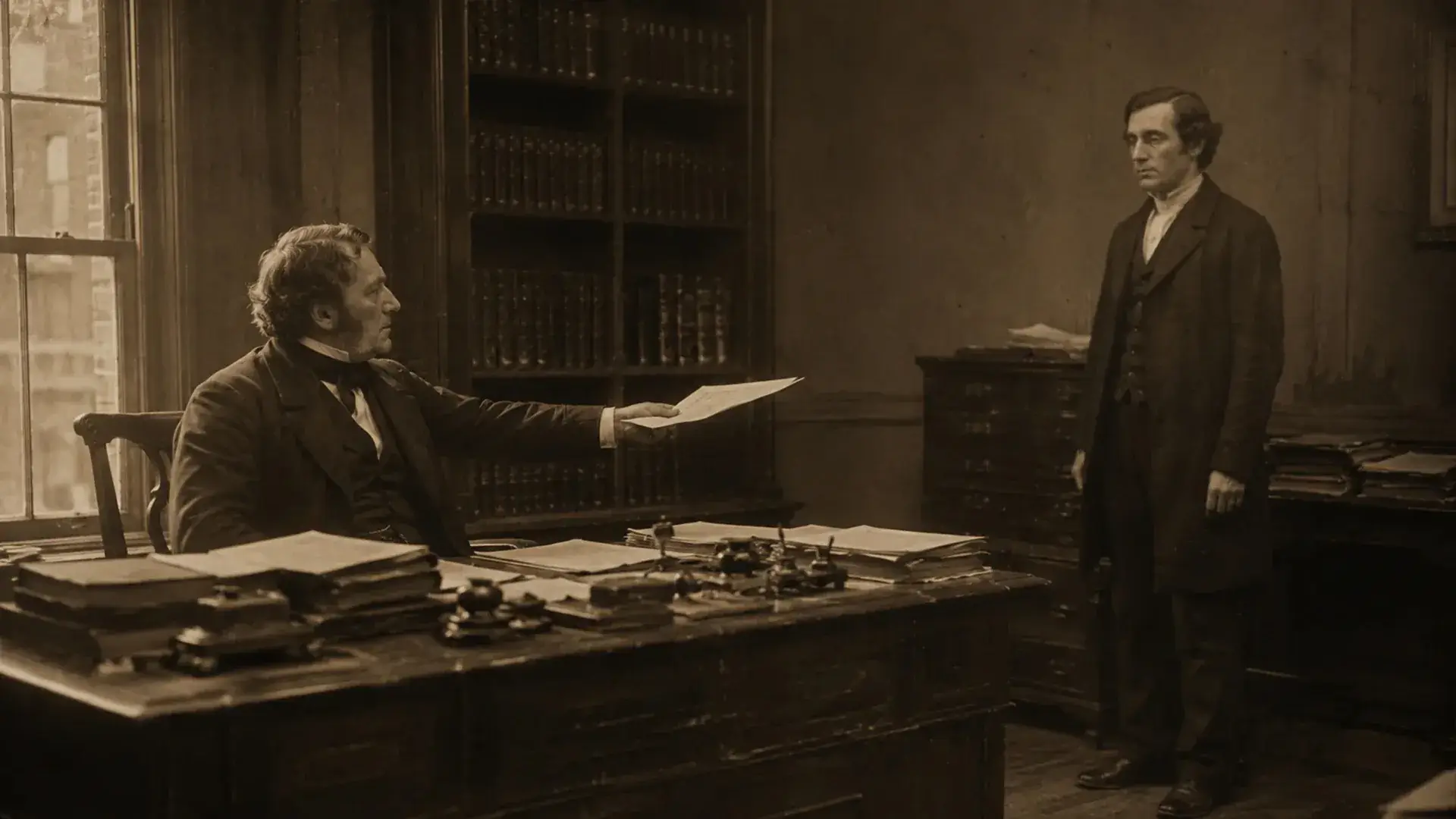
Every time we tackle a piece of classical literature on this site and on the YouTube channel, we bring in Aristotle. And every time we do, Jimmy gets emails. Why are you wasting our time with Aristotle? Why do we need to go back 2,000 years to read a 19th-century American story?
Here is the answer, and it applies to Bartleby, the Scrivener as directly as it applies to anything Aristotle ever actually read – and didn’t read.
Aristotle doesn’t give you rules for reading or writing. He analyzes classical drama the way a scientist analyzes nature — he takes it apart to see why it works, why it moves people, why certain stories burrow into the human mind and stay there. In short, he “defines” classical literature, which is what we cover here. What Aristotle found was structural truth. And structural truth, by definition, doesn’t expire.
The Six Elements — and Why Plot Comes First
According to Aristotle’s Poetics, a tragedy — and Jimmy uses “tragedy” to mean any piece of classical literature, comedy included — has six elements: plot, character, diction, thought, spectacle, and song. The first two are primary. Plot above all of them.
Why plot? Because plot, in Aristotle’s structure, is the representation of human action. Not ideas. Not personality. Not identity. Action. Human beings making decisions under pressure. Not thinking about things (though thinking is included in action so to speak). But action, pure and simple. Shooting a deserted in the back. Taking a shortcut when it’s -70 dgrees below zero. Deciding to kill the king to fulfill a prophecy. And like in Bartleby, deciding to move your offices instead of firing an employee.
Think about what you read in Bartleby. Every significant moment in the story is an action — or a refusal to act, which is itself a choice. The narrator calls Bartleby to proofread. Bartleby says, “I would prefer not to.” The narrator decides not to fire him. Bartleby stops copying entirely. The narrator moves his offices. Bartleby stays. The narrator offers to take Bartleby home. Bartleby says no. Events drive character. You do not know what a person will do until something happens to them.
That is why we read classical literature instead of genre fiction. Jack Reacher will always beat up the bad guys. You already know that before page one. There is no pressure, no revelation, no discovery. In Bartleby, you do not know what the narrator will do — and neither does the narrator until he did it. Until he decided to tell us this story.
Recognition and Reversal in Bartleby
Aristotle said complex plots involve a change of fortune — accompanied by recognition, reversal, or both. Simple plots don’t have these. Complex plots produce pity and fear, which Aristotle called catharsis: the emotional purging that great drama produces in its audience.
Bartleby is a complex plot. Emphatically.
Recognition happens when a character comes to know something they did not know before — about another person, about their situation, or about themselves. Most critical readings of Bartleby point to one recognition: the narrator’s closing speculation that Bartleby may have worked in the Dead Letter Office. But that is not the only recognition in this story. There are several. The narrator recognizes, more than once, that something about Bartleby disarms him — and that this disarming is not rational. He recognizes that keeping Bartleby around is a way to purchase a “sweet morsel for my conscience” — cheaply. There’s a lot of recognition going on, except the one that counts: that he, and he alone, is responsible for Bartleby.
Reversal is the moment when the action turns in the opposite direction. In Bartleby, the reversal is subtle but total: the man who started as absolute employer ends as someone who moves his own offices to escape an employee he cannot bring himself to fire. The man with power ends powerless. That is a reversal. And it happens the first time Bartleby says, “I’d prefer not to.”
Why Plot Is Primary
Modern audiences resist Aristotle’s insistence on plot because we live in an age obsessed with personality, identity, and psychology. We want to know who characters are, not what they do, or why they do it. That is the appeal of video games: action, without thought, without substance.
But Aristotle understood something we keep having to relearn: you don’t know who someone is until something happens to him or her.
You don’t know what you would do when faced with a man who simply, quietly, calmly refuses — until you are actually faced with it. Bartleby puts you in that moment. And he does not let you look away.
That is why this story has lasted 170 years, and why it will last 170 more.