Farewell to Arms Series Introduction
A Farewell to Arms: A Reading with Jimmy Series Introduction
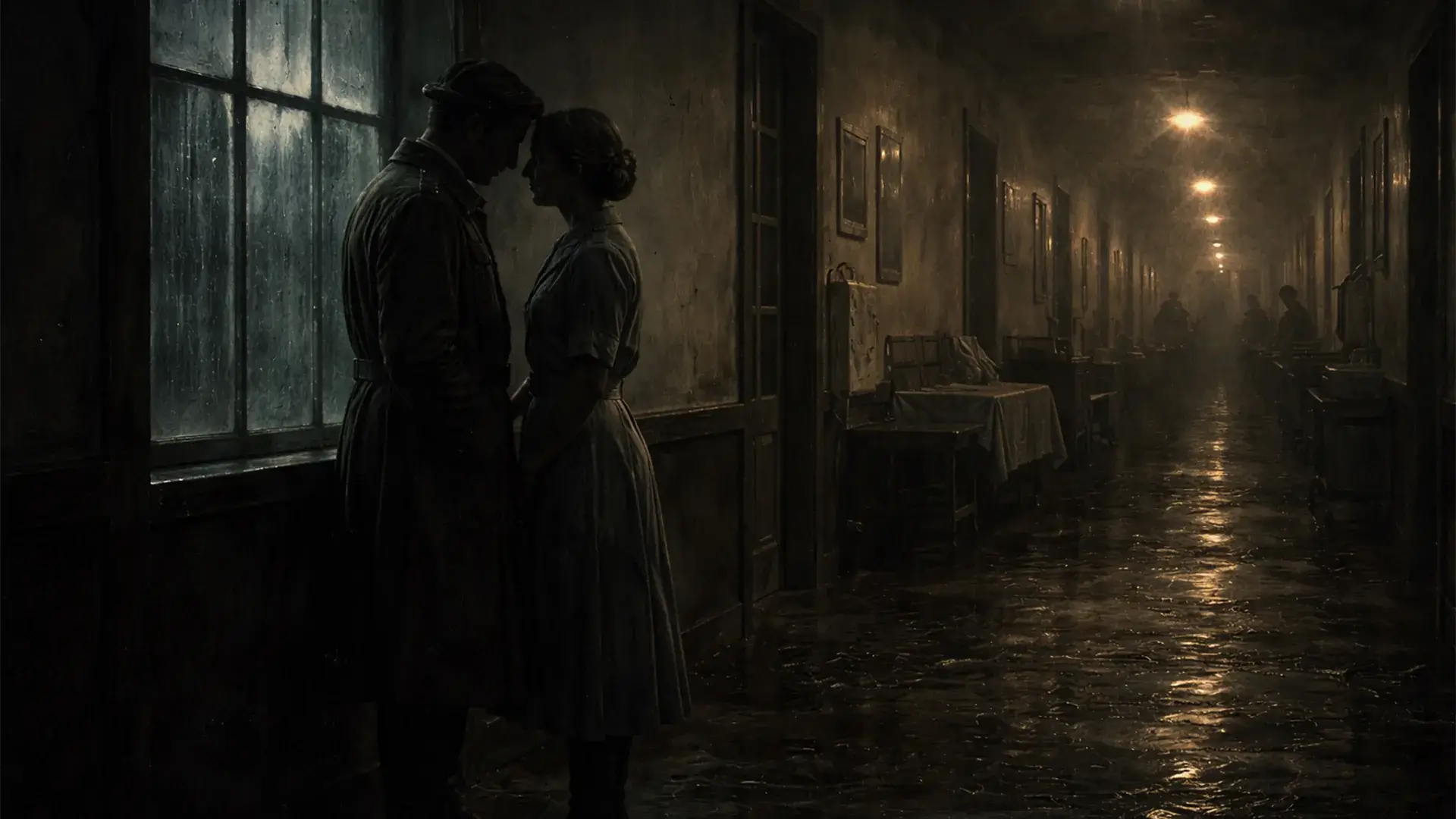
Most readers approach A Farewell to Arms as a tragic love story set against the chaos of war. They remember Catherine’s devotion, the retreat from Caporetto, the rain at the end. They speak of loss, of inevitability, of the brutality of history swallowing private happiness.
But Hemingway does not write this novel to sentimentalize love or condemn war in isolation.
He writes a story about a man who drifts.
Across five books, Lieutenant Frederic Henry moves from indulgence to desertion, from flirtation to retreat, from war to Switzerland, from companionship to isolation. The novel appears to build toward transcendence — toward love as salvation.
It does not.
It builds toward exposure.
This blog series will read A Farewell to Arms not as a romance broken by war, but as a study of commitment — what it demands, what it costs, and what happens when a man consistently chooses himself over obligation. The tragedy of the novel is not simply that Catherine dies. It is that Henry never becomes someone capable of loving beyond himself.
Across three essays, we will trace that progression:
- from detachment disguised as charm
- to moral collapse under pressure
- to survival that looks like endurance but feels like emptiness
Because the question in A Farewell to Arms is not whether love fails.
It is whether Henry ever truly commits.
The real tragedy of A Farewell to Arms is not Catherine’s death, but Henry’s failure to become someone capable of sacrifice.
#1 A Farewell to Arms Is Not a Love Story — It’s a Study of Commitment
Most readers approach A Farewell to Arms as a tragic love story set against the chaos of war. They remember Catherine’s devotion, the retreat from Caporetto, the rain at the end. They speak of loss, of inevitability, of the brutality of history swallowing private happiness.
But Hemingway does not write this novel to sentimentalize love or condemn war in isolation.
He writes a story about a man who drifts.
In this blog, we examine how A Farewell to Arms begins not as a love story or a war story, but as a study in emotional detachment. Frederic Henry moves through war as if insulated from it — observing, drinking, participating, but never fully committing. What looks like composure is actually distance. And Hemingway, through his first-person narrator Lt. Henry, shows us how dangerous that distance becomes once events force Henry to feel what he has tried to avoid.
Most readers remember A Farewell to Arms for its romance. They remember Catherine’s devotion. They remember the hospital in Milan. They remember the quiet intimacy in Switzerland. They remember the rain.
But before we can talk about love in this novel, we have to talk about the man who claims to experience it.
Frederic Henry does not begin this story in love.
He begins it in drift.
And drift is the opposite of commitment.
Henry’s First Condition: Detachment
In Book I, Henry moves through war with a strange mixture of participation and distance. He drinks. He visits prostitutes. He jokes. He performs his duties. He is wounded.
But he does not attach himself to anything.
He tells us plainly that being in love was “like a game of bridge.” He admits he did not love Catherine at first. He lies easily — to her, to others, to himself.
This matters because Henry’s defining trait is not cruelty.
It is insulation.
He floats through the early chapters as a man who refuses to take anything fully seriously — not war, not duty, not romance. He allows events to happen to him, but he does not root himself in them.
That is not romance.
That is avoidance.
Catherine Commits — Henry Experiments
Catherine’s famous line — “There is no me. There is only you.” — is often read as tragic devotion.
But what does Henry offer in return?
He offers presence. He offers attention. He offers physical closeness. But he does not offer surrender.
Even when wounded and recovering, Henry moves toward pleasure, toward comfort, toward the private world the two of them begin to build.
But that world is built on insulation.
Henry does not renounce war.
He does not renounce obligation.
He does not renounce self.
He simply steps aside from responsibility when it becomes inconvenient.
That is not the foundation of tragic love.
That is the foundation of self-preservation.
The Operation and the Lie
One of the most revealing moments in your analysis occurs around the timing of Catherine’s pregnancy and the surgical operation.
Henry manipulates the sequence of events. He calculates. He arranges. He protects himself first.
Even when he appears vulnerable, he remains in control of what he reveals and what he withholds.
He lies when necessary. He rationalizes easily.
That pattern will matter later.
Because love demands exposure.
Henry demands safety.
War as Background, Not Transformation
Many readings frame the war as the central antagonist of the novel. But in Books I and II, war functions almost as weather.
It is present. It is dangerous. It wounds him.
But it does not fundamentally change him.
Henry’s habits — sensuality, gluttony, self-protection — remain intact. He drinks heavily. He seeks pleasure. He avoids confrontation.
He is not yet morally tested.
He is simply drifting toward comfort.
And comfort, for Henry, is always private.
The Pattern Is Already Visible
If we look closely at the early books, the pattern is already forming:
- When confronted with seriousness, Henry deflects.
- When confronted with commitment, he delays.
- When confronted with obligation, he negotiates.
He is not a villain.
He is something more common.
He is a man who wants love without cost.
And that is precisely why this novel is not a simple love story.
The Real Question
By the end of Book II, readers often feel that Henry and Catherine have built something meaningful — something separate from the chaos of war.
But we must ask a harder question:
Has Henry committed to Catherine?
Or has he retreated into her?
There is a difference.
Commitment moves toward responsibility.
Retreat moves toward safety.
And Henry, from the very beginning, prefers safety.
Where This Is Heading
If A Farewell to Arms were merely about love interrupted by war, the story would move toward deepening attachment and tragic loss.
Instead, the novel moves toward pressure.
And pressure reveals character.
In the next essay, we will watch that pressure arrive — in the retreat from Caporetto, in violence, in desertion — and we will see whether Henry’s insulation holds.
Because this novel is not about whether love survives war.
It is about whether a man who repeatedly chooses self-preservation can ever truly surrender himself to another human being.
And the answer is not sentimental.
__________
Be sure to continue reading this series in Part Two: The Retreat Is Not Just Military — It’s Personal. This blog series will read A Farewell to Arms not as a romance broken by war, but as a study of commitment — what it demands, what it costs, and what happens when a man consistently chooses himself over obligation. The tragedy of the novel is not simply that Catherine dies. It is that Henry never becomes someone capable of loving beyond himself.